Frequently asked questions
Can you recommend any "vegetarian" fertilizers that do not contain animal by-products?

There are a number of excellent
plant-based fertilizers you can try. These include alfalfa pellets (5-1-2); kelp meal (1.5-.5-2.5); and seaweed liquid (.1-.1-1.0). The numbers in parenthesis after each product name indicate its nitrogen-phosphorus-potassium (N-P-K) ratio.
How can I improve my clay soil?
Soil preparation is very important to a successful garden or landscape. In clay or heavy soil it is advisable to add lots of well-rotted compost to help break up heavy soil particles, introduce microbial activity,
add nutrients, and improve drainage. To sustain these positive benefits, you will need to amend your soil regularly throughout the life of the garden. Making your own compost is a good way to keep a supply on hand year-round. You can also improve clay soil by planting cover crops, also known as green manures, in the winter. Alfalfa, buckwheat, and white clover are all cover crops that loosen and add nitrogen to the soil. Rather than working with your existing soil, you might also consider constructing
raised beds and filling them with a good-quality, all-purpose potting mix.
Whichever method you try, do not work with clay soil when it is wet as this forces the particles closer together. Compaction restricts proper gas exchange, the percolation of moisture and the normal growth of roots.
Are there any harmful side effects to using newspaper as a mulch?
Any risks from the slight amount of heavy metals present in the ink of daily newspapers are extremely remote. In fact, one environmentalist stated that to have any ill effect at all, you would have to eat twelve complete Sunday newpapers in one sitting! Newspapers are a great way to mulch your garden for weed control. Use a thick layer (no slick inserts) under your mulch and you will eliminate weed problems. Any that

do appear are very easy to pull. The paper will break down over time, adding organic material to your soil.
The following tips will help you maintain a healthy garden
Ensure that plants are healthy before adding them to your garden beds to avoid introducing pests or disease spores.
Water wisely Avoid overhead watering to prevent disease spores from washing onto healthy foliage. Using drip irrigation equipment not only prevents the spread of disease, but also helps to conserve water. Allow the soil to dry slightly between waterings to prevent fungal infections. Do not work among plants when they are wet to avoid the spread of water-borne diseases.
Remove and destroy severely infected plants or plant parts to avoid spreading diseases to healthy plants. Do not compost infected material. Clean your cutting tools with rubbing alcohol or a weak bleach solution between cuts when pruning diseased foliage.
Space plants widely to allow good air circulation. Crowded plants also tend to be weak and spindly, making them targets for pests and diseases.
Incorporate compost into the soil to introduce beneficial soil organisms and improve drainage.
Fertilize properly Nutrient deficiencies and imbalances make plants more attractive to pests. Overfertilization with nitrogen can cause lush, tender growth that attracts sucking pests such as aphids.
Controlling pests and diseases
Despite your best efforts to prevent pests and diseases, infections and infestations may sometimes occur. The least harmful way to combat these intruders is through physical controls.
Install barriers, such as floating row covers, fences, netting, cutworm collars, and copper barrier tape, to protect your plants from future infestation or infection.
Traps and
repellents are other low-impact options for foiling insect and animal invaders.
If mechanical methods do not solve the problem, the next option is biological control. There are a number of biological control options available to the home gardener. Attract beneficial insects by creating a diverse ecosystem. Plant small-flowered nectar plants such as alyssum and dill to provide an additional food source for beneficials. Attract pest-eating birds, by placing
birdhouses, birdbaths and feeders near your garden.
Bacillus thuringiensis (Bt) is a naturally occurring bacterium that acts as a stomach poison when consumed by certain pests, but it is harmless to beneficial insects.
Milky spore is a bacterial disease that specifically targets Japanese beetle larvae. Beneficial nematodes, microscopic soil-dwelling organisms, parasitize many harmful insect larvae.
The adage
"An ounce of prevention is worth a pound of cure" also holds true in the garden. With proper maintenance, you can virtually eliminate pest and disease problems before they start.
 Between the squirrels, moles, deer and rabbits, having a successful spring bulb display can be challenging and frustrating. But there are several steps you can take to outwit these critters.
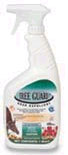
Some gardeners have had success with repellents such as mothballs or blood meal. However, the best trick we have found is to dip the bulbs in a product called Tree Guard before planting them.
Between the squirrels, moles, deer and rabbits, having a successful spring bulb display can be challenging and frustrating. But there are several steps you can take to outwit these critters.
Some gardeners have had success with repellents such as mothballs or blood meal. However, the best trick we have found is to dip the bulbs in a product called Tree Guard before planting them.
 Tree Guard's latex based formula resists water and keeps working for an entire season. A unique latex polymer carries the active ingredient, Bitrex, and holds it to the surface of the plant, resisting rain, and wash-off for up to 100 days is what makes TREE GUARD different. Tree Guard has a foul taste and smell that critters know to stay away from! It really does work.
Then, cover the bulbs with a few handfuls of a sharp gravel as a good deterrent because it hurts the squirrels' feet. And if you can't get the squirrels to leave your tulips alone, try planting daffodils. they don't like them.
Click Here to Order Tree Guard or to see our full line of critter ridders!
Tree Guard's latex based formula resists water and keeps working for an entire season. A unique latex polymer carries the active ingredient, Bitrex, and holds it to the surface of the plant, resisting rain, and wash-off for up to 100 days is what makes TREE GUARD different. Tree Guard has a foul taste and smell that critters know to stay away from! It really does work.
Then, cover the bulbs with a few handfuls of a sharp gravel as a good deterrent because it hurts the squirrels' feet. And if you can't get the squirrels to leave your tulips alone, try planting daffodils. they don't like them.
Click Here to Order Tree Guard or to see our full line of critter ridders!


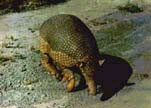
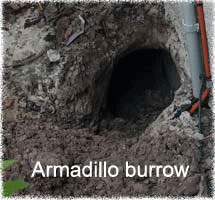
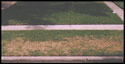
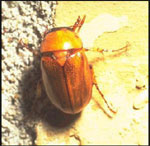
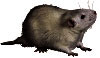
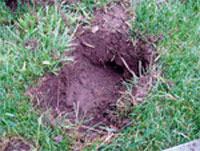
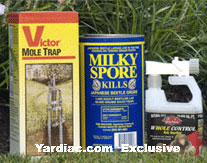



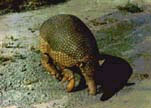
 Animals that burrow through soil are an especially troubling pest for homeowners and businesses, alike. Moles and voles are a nuisance in lawns and golf courses, and increasingly throughout the Gulf States, the armadillo has become a formidable enemy.
All three of these pests create tunnels and runways through the soil, demolishing landscaped areas and often attacking trees and ornamental plantings in their insatiable search for food. Moles, as well as the armadillo, being insectivores, feed on grubs, earthworms, mole crickets, spiders, and other invertebrate pests. Voles, meanwhile, eat a variety of grasses and plant roots.
"The options are repelling these pests, or trapping them," points out Jim Springer, vice president of Dr. T's Nature Products, adding that trapping programs are impractical. "For many, it's too time-consuming, there are no guarantees, and often, the expertise is not there," he noted. Controlling these pests is even more difficult, he said, because in some states, these animals are protected species.
But a new product from Dr. T's Nature Products is registered to repel these animals from lawns, golf courses, and other landscaped areas, where they do most of their damage. Made up of 100% organic oil,
Animals that burrow through soil are an especially troubling pest for homeowners and businesses, alike. Moles and voles are a nuisance in lawns and golf courses, and increasingly throughout the Gulf States, the armadillo has become a formidable enemy.
All three of these pests create tunnels and runways through the soil, demolishing landscaped areas and often attacking trees and ornamental plantings in their insatiable search for food. Moles, as well as the armadillo, being insectivores, feed on grubs, earthworms, mole crickets, spiders, and other invertebrate pests. Voles, meanwhile, eat a variety of grasses and plant roots.
"The options are repelling these pests, or trapping them," points out Jim Springer, vice president of Dr. T's Nature Products, adding that trapping programs are impractical. "For many, it's too time-consuming, there are no guarantees, and often, the expertise is not there," he noted. Controlling these pests is even more difficult, he said, because in some states, these animals are protected species.
But a new product from Dr. T's Nature Products is registered to repel these animals from lawns, golf courses, and other landscaped areas, where they do most of their damage. Made up of 100% organic oil,  The product is capable of penetrating soil surfaces because of its unique application system, Springer notes. "We've got a specialty sprayer head that emulsifies that product with water, mixing it 20-to-1, and takes it into the soil 6 to 12 inches when it is sprayed," he said. The product is then re-activated, he added, each time it rains or the lawn is watered. Each application remains effective for approximately two months. (The product can also be applied using conventional spraying equipment -
  Say Goodbye to Moles and Voles Forever!
  Apply Whole Control when the signs of digging, tunneling and burrowing by animals first appear. For year round control apply Spring, Summer & Fall. DO NOT APPLY DIRECTLY TO LAKES, PONDS, STREAMS OR OTHER STANDING WATER.
For a more permanent control we recommend using the Yardiac.com
Apply Whole Control when the signs of digging, tunneling and burrowing by animals first appear. For year round control apply Spring, Summer & Fall. DO NOT APPLY DIRECTLY TO LAKES, PONDS, STREAMS OR OTHER STANDING WATER.
For a more permanent control we recommend using the Yardiac.com  To learn more or to purchase the