 Use a pond de-icer to heat a small opening in the top of your pond where it normally would freeze. A de-icer will keep an area thawed in the pond, allowing the release of toxic gases from decomposing organic matter to escape and at the same time, allowing oxygen to enter your pond. Used primarily for ponds containing fish. The pond de-icers have automatic thermo-regulators inside and turn on when the water temperature hits 44F. The "heat" generated by the de-icer will keep an area of the pond's surface from freezing, allowing the toxic gases to escape and oxygen to enter.
Showing posts with label Water Gardening. Show all posts
Showing posts with label Water Gardening. Show all posts
Tuesday, November 17, 2009
Provide the Required Oxygen to Your Pond
Use a pond de-icer to heat a small opening in the top of your pond where it normally would freeze. A de-icer will keep an area thawed in the pond, allowing the release of toxic gases from decomposing organic matter to escape and at the same time, allowing oxygen to enter your pond. Used primarily for ponds containing fish. The pond de-icers have automatic thermo-regulators inside and turn on when the water temperature hits 44F. The "heat" generated by the de-icer will keep an area of the pond's surface from freezing, allowing the toxic gases to escape and oxygen to enter.


Monday, January 14, 2008
Planning a Pond
The most important part of installing a pond is planning. Start well here, and the rest will be easy.
 Using a liner to build your pond means that you have a great deal of flexibility in its design. It is therefore worth taking the time to carefully think about what the pond is going to look like when it is finished. It is also important to determine the
optimum position for it, both for its aesthetic appeal and also for practical considerations.
You should bear the following points in mind, even though you may not be able to implement them all.
Proportion The pond shouldn’t be disproportionate to the size of the garden.
Using a liner to build your pond means that you have a great deal of flexibility in its design. It is therefore worth taking the time to carefully think about what the pond is going to look like when it is finished. It is also important to determine the
optimum position for it, both for its aesthetic appeal and also for practical considerations.
You should bear the following points in mind, even though you may not be able to implement them all.
Proportion The pond shouldn’t be disproportionate to the size of the garden.  Position The pond should be in a position where it can be easily viewed.
Electricity It is important that an electricity supply can be run down to it.
Aspect The pond should be in the sun for about 6 hours a day in order to
promote good plant growth, without encouraging excessive algae problems.
Trees Over-hanging trees can present a problem as they drop blossom and leaves, which poll
Position The pond should be in a position where it can be easily viewed.
Electricity It is important that an electricity supply can be run down to it.
Aspect The pond should be in the sun for about 6 hours a day in order to
promote good plant growth, without encouraging excessive algae problems.
Trees Over-hanging trees can present a problem as they drop blossom and leaves, which poll ute the water. Strong root growth can also threaten the structure of the pond,and therefore it should not be situated next to large trees. Certain trees, such as willows, are also poisonous and should be kept well clear of the pond. It is also advisable to keep the pond away from cherry and plum trees, as they provide over-wintering sites for the eggs of water lily aphids.
Style The style of the pond must suit its surroundings. For example, a wildlife pond will look out of place in a formal patio.
Access The pond should be accessible for occasional maintenance.
ute the water. Strong root growth can also threaten the structure of the pond,and therefore it should not be situated next to large trees. Certain trees, such as willows, are also poisonous and should be kept well clear of the pond. It is also advisable to keep the pond away from cherry and plum trees, as they provide over-wintering sites for the eggs of water lily aphids.
Style The style of the pond must suit its surroundings. For example, a wildlife pond will look out of place in a formal patio.
Access The pond should be accessible for occasional maintenance.
Using a liner to build your pond means that you have a great deal of flexibility in its design. It is therefore worth taking the time to carefully think about what the pond is going to look like when it is finished. It is also important to determine the
optimum position for it, both for its aesthetic appeal and also for practical considerations.
You should bear the following points in mind, even though you may not be able to implement them all.
Proportion The pond shouldn’t be disproportionate to the size of the garden.
Position The pond should be in a position where it can be easily viewed.
Electricity It is important that an electricity supply can be run down to it.
Aspect The pond should be in the sun for about 6 hours a day in order to
promote good plant growth, without encouraging excessive algae problems.
Trees Over-hanging trees can present a problem as they drop blossom and leaves, which pollute the water. Strong root growth can also threaten the structure of the pond,and therefore it should not be situated next to large trees. Certain trees, such as willows, are also poisonous and should be kept well clear of the pond. It is also advisable to keep the pond away from cherry and plum trees, as they provide over-wintering sites for the eggs of water lily aphids.
Style The style of the pond must suit its surroundings. For example, a wildlife pond will look out of place in a formal patio.
Access The pond should be accessible for occasional maintenance. Friday, January 11, 2008
Toad Houses to Brighten Your Garden  by Emily Weathers
by Emily Weathers
Garden season is just around the corner, which means it’s time to start thinking of how to make it more exciting than last year. This year, you should start with a toad house. There are several Toad Houses now available that you would have never thought of that a re so unique that will defiantly stand out from others! You can get a castle for your prince or a 70’s style house to a Toad Spaceship. Not only are these decorative, but they will help the garden as well.
We know not all toads are cute, but they have their ways. Toads consume approximately 110 bugs a day, such as moths, beetles, slugs and other bugs that like to damage your garden. Now that's definitely help to your garden! To spoil the helper toad, you may want to add a garden light, which not only will accent the garden, it will attract moths and other night bugs that will definite interest the toad in a
re so unique that will defiantly stand out from others! You can get a castle for your prince or a 70’s style house to a Toad Spaceship. Not only are these decorative, but they will help the garden as well.
We know not all toads are cute, but they have their ways. Toads consume approximately 110 bugs a day, such as moths, beetles, slugs and other bugs that like to damage your garden. Now that's definitely help to your garden! To spoil the helper toad, you may want to add a garden light, which not only will accent the garden, it will attract moths and other night bugs that will definite interest the toad in a  snack. After a long night of snaking away, they need a cozy, moist resting place to hide during those humid summer days.
re so unique that will defiantly stand out from others! You can get a castle for your prince or a 70’s style house to a Toad Spaceship. Not only are these decorative, but they will help the garden as well.
We know not all toads are cute, but they have their ways. Toads consume approximately 110 bugs a day, such as moths, beetles, slugs and other bugs that like to damage your garden. Now that's definitely help to your garden! To spoil the helper toad, you may want to add a garden light, which not only will accent the garden, it will attract moths and other night bugs that will definite interest the toad in a snack. After a long night of snaking away, they need a cozy, moist resting place to hide during those humid summer days.
Once the toad house is chosen, you need to find the perfect location. The toad has needs to be placed under vegetation in a discrete and moist place. If you don’t have a pond you can water thi s location daily with a watering can to keep it moist. Toads drink by soaking in water and absorbing it through their skin. Another option for a pond would be to make your own pond.
s location daily with a watering can to keep it moist. Toads drink by soaking in water and absorbing it through their skin. Another option for a pond would be to make your own pond.
You would need to take a small try, or pie dish and burry I partially in the ground and fill with water. This should be placed near the house so the toad can enjoy a nice soak!
Enjoy your Toad House!
Saturday, October 28, 2006
Fall Pond Preparation
 Attention Water Garden aficionados!
Fall is the time to cover ponds with netting to exclude fallen tree leaves. Your tropical lilies will continue to bloom until frost; remember top keep them fertilized to encourage strong blooming. Also, periodically remove the older, yellow leaves and spent flower heads of tropical lilies.
Watch out for the LEAFMINER!! The water lily leafminer is a common pest that produces serpentine mines in leaves. The pest is easily eradicated by simply removing and discarding affected leaves.
Attention Water Garden aficionados!
Fall is the time to cover ponds with netting to exclude fallen tree leaves. Your tropical lilies will continue to bloom until frost; remember top keep them fertilized to encourage strong blooming. Also, periodically remove the older, yellow leaves and spent flower heads of tropical lilies.
Watch out for the LEAFMINER!! The water lily leafminer is a common pest that produces serpentine mines in leaves. The pest is easily eradicated by simply removing and discarding affected leaves.
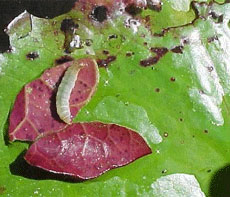 The china mark moth larva is another pest of lilies. The larvae live in small pockets of leaf tissue and float on the pond eating holes in the edge of lily pads. Pick off and dispose of the affected foliage. As always, avoid spraying pesticides around your pond. Aquatic plants and animals are very sensitive to chemical sprays.
Now for the fun part -- October is a good time to clean out excessive plant growth in your pond and remove dead or diseased leaves. Interested in netting and supplies your Water Garden? See Yardiac.com, for our selection!
The china mark moth larva is another pest of lilies. The larvae live in small pockets of leaf tissue and float on the pond eating holes in the edge of lily pads. Pick off and dispose of the affected foliage. As always, avoid spraying pesticides around your pond. Aquatic plants and animals are very sensitive to chemical sprays.
Now for the fun part -- October is a good time to clean out excessive plant growth in your pond and remove dead or diseased leaves. Interested in netting and supplies your Water Garden? See Yardiac.com, for our selection!
Tuesday, March 28, 2006
Learn to Water Garden in Six Easy Steps

Step 1 Pick a location in your that is fairly even and receives at least six hours of sunlight per day. It's a good idea not to put your pond under trees. Leaves can dramatically affect the waters biological balance and roots can make digging difficult. Pre-form your pond in any shape using a rope or garden hose to outline the edges.
Step 2 Now it is time to dig the hole. We recommend setting up two or three tiers within your pond. This will allow a better atmosphere for both fish and aquatic plants. Fish require shallow areas for feeding and deeper areas for security. Plants, such as lilies, can be placed on tiers and add dramatic effect to the overall look. Shallow areas should be between 8" and 16" and deep areas should be between 17"-40". In most parts of the US, 24" is a sufficient depth for your deeper areas. In areas of prolonged winters, consider a depth of 32" to 40", adding borders and bottom drains.
Step 3 Underline the hole with sand, or carpet padding, to protect the liner from root and rock punctures. We recommend using a strong underliner, to guarantee a rupture free pond!
Step 4 Place the liner over the hole, holding it in place with bricks or rocks and fill the pond with water. this will cause the liner to conform to the desired shape.

Step 6 Install the filtration system and water garden pump for a waterfall or fountain. Then treat the pond with chemicals, add plants and wait 30 days to add fish. This will guarantee that your pond and filter are biologically ready to support aquatic life. Feed fish two or three times daily, only as much as they will consume in a few minutes. Never over feed your fish!
If you are interested in building your own water garden, don't miss Yardiac's selection!
Wednesday, February 15, 2006
Mosquito Facts & West Nile Virus Update
Mosquito Facts
 Mosquito, the name is Spanish for little fly. There are 3000 different kinds of mosquitoes and a worldwide population of 100 trillion!! Most are in tropical climates, but there are mosquitoes in arctic and desert regions.
They can fly up to 10 mph, dart between raindrops and even fly backwards. Most live and die close to where they hatch, but some are strong flyers that travel many miles in search of a victim.
Only female mosquitoes bite. They require a blood meal in order to develop eggs to make more mosquitoes. Most female mosquitoes lay their eggs on standing water. Stagnant ponds, ditches, and fresh, or salt, water wetlands are favorites, but even a few tablespoons of water in a flower pot or old auto tire will do. The eggs hatch, become swimming larvae, then pupae and finally flying adults. Mosquito larvae are an important source of food for certain fish, birds, bats and other animals. To reduce Mosquito infestation we recommend using Mosquito Bits or Mosquito Dunks. A SkeeterVac is a long term and highly effective solution for eliminating mosquitoes. Skeeter Vac's patent pending scientifically proven technology creates an atmosphere biting mosquitoes can't resist: warmth, water vapor, carbon dioxide and odorants. Then it finishes off the job by trapping and killing those biting pests so your outdoor experiences are safer and more enjoyable.
What's being done about Mosquitoes and what you can do
In their quest for blood, mosquitoes may bite birds, frogs, snakes, and mammals, including people. Some, called peridomestic mosquitoes, actually live, and breed, around homes just to be near us.
Mosquito, the name is Spanish for little fly. There are 3000 different kinds of mosquitoes and a worldwide population of 100 trillion!! Most are in tropical climates, but there are mosquitoes in arctic and desert regions.
They can fly up to 10 mph, dart between raindrops and even fly backwards. Most live and die close to where they hatch, but some are strong flyers that travel many miles in search of a victim.
Only female mosquitoes bite. They require a blood meal in order to develop eggs to make more mosquitoes. Most female mosquitoes lay their eggs on standing water. Stagnant ponds, ditches, and fresh, or salt, water wetlands are favorites, but even a few tablespoons of water in a flower pot or old auto tire will do. The eggs hatch, become swimming larvae, then pupae and finally flying adults. Mosquito larvae are an important source of food for certain fish, birds, bats and other animals. To reduce Mosquito infestation we recommend using Mosquito Bits or Mosquito Dunks. A SkeeterVac is a long term and highly effective solution for eliminating mosquitoes. Skeeter Vac's patent pending scientifically proven technology creates an atmosphere biting mosquitoes can't resist: warmth, water vapor, carbon dioxide and odorants. Then it finishes off the job by trapping and killing those biting pests so your outdoor experiences are safer and more enjoyable.
What's being done about Mosquitoes and what you can do
In their quest for blood, mosquitoes may bite birds, frogs, snakes, and mammals, including people. Some, called peridomestic mosquitoes, actually live, and breed, around homes just to be near us.
 Twenty-four hours or so after hatching, a female mosquito flies off in search of a meal. She homes in on body warmth, odor, moisture and the carbon dioxide we exhale. When she bites, the mosquito injects a bit of saliva that slows coagulation so blood flows freely. It's your body's allergic reaction to the saliva that caused the welt and itching sensation.
Mosquitoes can also transmit canine heartworm, which is fatal to dogs once contracted. For protection, pet owners can purchase a preventative medicine from their veterinarian.
Generally, the trend in the U.S. is away from spraying adult mosquitoes with chemicals. Whenever possible, government health authorities control large tracts of mosquito breeding land by larviciding. They use low toxicity biopesticides like B.T.I. (Bacillius thuringiensis
subspecies israelensis), a live bacteria that's deadly to mosquito larvae, harmless to other living things.
The mosquito that bit you last night may have hatched in the birdbath right in your own back yard. At home or with school or community groups, you can effectively reduce mosquito problems using common sense and environmentally-conscious methods.
Organize a neighborhood cleanup. Its great community project that will eliminate lots of potential mosquito breeding spots and improve the view! Look for places where rainwater collects and stands. Old car tires, drain flower pots, children's wading pools and tree holes.
Twenty-four hours or so after hatching, a female mosquito flies off in search of a meal. She homes in on body warmth, odor, moisture and the carbon dioxide we exhale. When she bites, the mosquito injects a bit of saliva that slows coagulation so blood flows freely. It's your body's allergic reaction to the saliva that caused the welt and itching sensation.
Mosquitoes can also transmit canine heartworm, which is fatal to dogs once contracted. For protection, pet owners can purchase a preventative medicine from their veterinarian.
Generally, the trend in the U.S. is away from spraying adult mosquitoes with chemicals. Whenever possible, government health authorities control large tracts of mosquito breeding land by larviciding. They use low toxicity biopesticides like B.T.I. (Bacillius thuringiensis
subspecies israelensis), a live bacteria that's deadly to mosquito larvae, harmless to other living things.
The mosquito that bit you last night may have hatched in the birdbath right in your own back yard. At home or with school or community groups, you can effectively reduce mosquito problems using common sense and environmentally-conscious methods.
Organize a neighborhood cleanup. Its great community project that will eliminate lots of potential mosquito breeding spots and improve the view! Look for places where rainwater collects and stands. Old car tires, drain flower pots, children's wading pools and tree holes.
 Goldfish and fresh water minnows (Gambusia affinis) will both eat mosquito larvae. Microbe Lift is an ideal supplement to protect pond areas for excessive mosquito hatchlings. Check with your local mosquito control agency about availability and local regulations. Flush birdbaths and fountains weekly. Clean clogged gutters and drains, cover cesspools.
Let Yardiac.com help you!
To Humans and domestic animals, mosquitoes are a nuisance and a health hazard since mosquitoes can transmit a variety of diseases.
Fortunately, Yardiac.com is there to help and protect you from the health risk mosquitoes present. When you can't flush or drain stagnant pools, low-lying wet areas, tree holes, unused swimming pools and rain barrels, use a B.T.I. product like Mosquito Bits or Mosquito Dunks.
Goldfish and fresh water minnows (Gambusia affinis) will both eat mosquito larvae. Microbe Lift is an ideal supplement to protect pond areas for excessive mosquito hatchlings. Check with your local mosquito control agency about availability and local regulations. Flush birdbaths and fountains weekly. Clean clogged gutters and drains, cover cesspools.
Let Yardiac.com help you!
To Humans and domestic animals, mosquitoes are a nuisance and a health hazard since mosquitoes can transmit a variety of diseases.
Fortunately, Yardiac.com is there to help and protect you from the health risk mosquitoes present. When you can't flush or drain stagnant pools, low-lying wet areas, tree holes, unused swimming pools and rain barrels, use a B.T.I. product like Mosquito Bits or Mosquito Dunks.
Mosquito, the name is Spanish for little fly. There are 3000 different kinds of mosquitoes and a worldwide population of 100 trillion!! Most are in tropical climates, but there are mosquitoes in arctic and desert regions.
They can fly up to 10 mph, dart between raindrops and even fly backwards. Most live and die close to where they hatch, but some are strong flyers that travel many miles in search of a victim.
Only female mosquitoes bite. They require a blood meal in order to develop eggs to make more mosquitoes. Most female mosquitoes lay their eggs on standing water. Stagnant ponds, ditches, and fresh, or salt, water wetlands are favorites, but even a few tablespoons of water in a flower pot or old auto tire will do. The eggs hatch, become swimming larvae, then pupae and finally flying adults. Mosquito larvae are an important source of food for certain fish, birds, bats and other animals. To reduce Mosquito infestation we recommend using Mosquito Bits or Mosquito Dunks. A SkeeterVac is a long term and highly effective solution for eliminating mosquitoes. Skeeter Vac's patent pending scientifically proven technology creates an atmosphere biting mosquitoes can't resist: warmth, water vapor, carbon dioxide and odorants. Then it finishes off the job by trapping and killing those biting pests so your outdoor experiences are safer and more enjoyable.
What's being done about Mosquitoes and what you can do
In their quest for blood, mosquitoes may bite birds, frogs, snakes, and mammals, including people. Some, called peridomestic mosquitoes, actually live, and breed, around homes just to be near us.
Twenty-four hours or so after hatching, a female mosquito flies off in search of a meal. She homes in on body warmth, odor, moisture and the carbon dioxide we exhale. When she bites, the mosquito injects a bit of saliva that slows coagulation so blood flows freely. It's your body's allergic reaction to the saliva that caused the welt and itching sensation.
Mosquitoes can also transmit canine heartworm, which is fatal to dogs once contracted. For protection, pet owners can purchase a preventative medicine from their veterinarian.
Generally, the trend in the U.S. is away from spraying adult mosquitoes with chemicals. Whenever possible, government health authorities control large tracts of mosquito breeding land by larviciding. They use low toxicity biopesticides like B.T.I. (Bacillius thuringiensis
subspecies israelensis), a live bacteria that's deadly to mosquito larvae, harmless to other living things.
The mosquito that bit you last night may have hatched in the birdbath right in your own back yard. At home or with school or community groups, you can effectively reduce mosquito problems using common sense and environmentally-conscious methods.
Organize a neighborhood cleanup. Its great community project that will eliminate lots of potential mosquito breeding spots and improve the view! Look for places where rainwater collects and stands. Old car tires, drain flower pots, children's wading pools and tree holes.
Goldfish and fresh water minnows (Gambusia affinis) will both eat mosquito larvae. Microbe Lift is an ideal supplement to protect pond areas for excessive mosquito hatchlings. Check with your local mosquito control agency about availability and local regulations. Flush birdbaths and fountains weekly. Clean clogged gutters and drains, cover cesspools.
Let Yardiac.com help you!
To Humans and domestic animals, mosquitoes are a nuisance and a health hazard since mosquitoes can transmit a variety of diseases.
Fortunately, Yardiac.com is there to help and protect you from the health risk mosquitoes present. When you can't flush or drain stagnant pools, low-lying wet areas, tree holes, unused swimming pools and rain barrels, use a B.T.I. product like Mosquito Bits or Mosquito Dunks.
Subscribe to:
Posts (Atom)


