Showing posts with label birding information. Show all posts

Sunday, November 15, 2009

Hi Protein Bar - Helps Birds in Winter

Snow turns the garden into a winter wonderland, but it's not so kind to our feathered friends. We always urge gardeners to place extra bird food and water to help birds survive cold spells. Heavy snowfall can cover vital food sources like seeds, berries and grubs leaving birds struggling to feed themselves and keep warm. With proper bird food placement you can make a real difference in the survival rate. Birds require nutrition to maintain their relatively high body temperature. Without food for energy, they will die. They must consume 30 percent of their own body weight each day or find less food packed with energy (A.K.A. Protein). Dried mealworm products are excellent food sources for your wild birds. Providing Mealworms will keep them warm and able to survive the bitterly cold nights. This high quality, nutritional, natural food product is a special treat that birds love and our preservative-free and additive-free dried mealworms will help keep your birds healthy as well. Mealworms ensure an excellent, high quality nutritional and dietetic food source for your birds.

Wednesday, November 11, 2009

Feed Up To 20 Birds at One Time

No-No Bird Feeders This "NO-NO" Bird Feeder was developed and constructed with No wood and No plastic. It is an all metal collapsible wire basket sunflower seed feeder that is similar in design to fish baskets you may have seen. The large "clinging mesh area" allows many birds to feed at one time. It met all of the requirements that we felt were important and a few more. It will not rot or fall apart like wooden feeders, and the squirrels cannot tear them apart like other feeders. Feed finches, woodpeckers, chickadees, nuthatches, cardinals, and many others! You will have a wider variety of birds eating from this feeder than from any other you could buy. You usually will see perching birds and clinging birds, and even those that eat upside down. The hole size in the wire mesh is designed to hold black oil sunflower seeds, the most popular feed for wild birds. Mixtures of black oil sunflower seeds, stripped sunflower seeds, safflower seeds, and peanut pieces can be added as well.

Tuesday, October 13, 2009

Porcelain - A Worthy Bird House

At first glance, they are beautiful and unique, but a more inquisitive look reveals that these Bird Feeders are very functional as well. They are designed to attract a number of secondary cavity nesters such as Wrens, Chickadees, smaller Flycatchers and even some Warblers. The porcelain is an excellent material to help regulate the extremes of temperature and provide a durable, beautiful home for birds. The porcelain is durable enough to handle the elements from summer heat to rain and the subfreezing temperatures of a cold spring night. Porcelain is a ceramic material made by heating raw materials, generally including clay in the form of kaolin. The toughness, strength, and translucence of porcelain arise mainly from the formation of glass and the mineral mullite within the fired body at these high temperatures. It can informally be referred to as "china" in some English-speaking countries, as China was the birth place of porcelain making. Properties associated with porcelain include low permeability and elasticity; considerable strength, hardness, glassiness, brittleness, whiteness, translucence, and resonance; and a high resistance to chemical attack and thermal shock which makes this a perfect "bird home".

Saturday, September 05, 2009

Birds Attracted to Water More Than Seed

bird Baths One of the kindest things people can do for their feathered friends is to provide a Bird Bath. Sometimes fresh, clean water is hard for a bird to find. You can make a bird's day simply by offering a drink and a bath. Parent birds will often bring their babies to the bath after they fledge and show them where it is. bird BathsWater will actually attract more species of birds than feeders will. Birds such as wrens, catbirds, and waxwings, who eat insects or fruit, don't visit most feeders. But a birdbath attracts all kinds of birds. Bluebirds, robins, catbirds, warblers and thrushes. We've even watched screech owls drinking from a birdbath right in town at dawn.

Wednesday, September 02, 2009

Heating Your Bird Baths

Birds will certainly appreciate the addition of a heat source during the winter months. This will ensure a source of fresh drinking water year round. If you plan to use a water feature or a heater, make sure that the birdbath is located where there is access to a GFCI outlet. The depth and type of surface are also very important. The center part should be about 2 or 3 inches deep and the edges should be shallow to allow the birds to wade into the water. The bottom of the birdbath should be rough because birds do not like their feet to slide. A simple idea to make room for more birds is to add a few rocks to the center of a birdbath to create more perches. If you already have a birdbath that may be too deep or slippery you can modify it by adding pebbles to the bottom.

Monday, August 31, 2009

Circulating Fresh Water in a Bird Bath

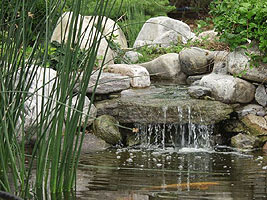
There are many different kinds of birdbaths on the market. A feature that might make the birdbath especially popular with the local birds is moving water. Moving water fascinates and attracts birds. Adding a mister or a fountain to the birdbath will increase the number of birds that visit. For example, a hummingbird will not wade into water but they love to fly through it and get their feathers wet. Moving water will prevent mosquitoes from breeding and mineral, plus it will lessen the chance of mineral deposits and minimize stains and water contamination.

Thursday, August 27, 2009

Where to Place Your Bird Bath

Birds depend on a source of water more than they do a bird feeder. Many species of birds that will not come to a feeder will visit water. Watching birds use a birdbath to drink and bathe is a never-ending source of entertainment for the entire family. When deciding to add a birdbath to your yard, it is important to carefully consider the location. It should be at least 5 to 10 feet away from any place a predator, like a cat, could hide. Birdbaths on a pedestal provide some protection as well. Branches hanging a few feet above the water will give birds a place to escape in the event a predator does make an appearance. This is important because a wet bird will only be able to flutter a few feet. Make sure the birdbath is within reach of a hose. The water will need to be changed frequently to keep birds healthy. Situate the birdbath so it is visible from indoors so the entire family can enjoy the birds anytime.

Thursday, August 13, 2009

Attracting Hummingbirds

A key tip for attracting hummingbirds is "the more feeders, the more birds." For an average yard, 4 to 10 feeders spaced apart will work best. This keeps the dominant hummingbird from ruling the roost. Hummingbirds will feed more during their southward migration than northern migration, this is due to breeding season. Consistant feeding year after year will attract generations of hummingbirds. The key to attracting hummingbirds to a new feeder is have them up when hummingbirds first arrive. April and May are good target dates

Sunday, July 19, 2009

Hummingbirds - Slow Adaptors to Change

We get calls from customers all the time stating their new Hummingbird Feeder will not attract Hummingbirds. Well this is the case sometimes and here is the solution: First, it is important to know, Hummingbirds get energy primarily from flower nectar and the sugar water they find at feeders. For protein and they also eat soft-bodied insects and spiders. Think of them as miniature flycatchers, and sugar is just the fuel for getting their real nourishment. Hummingbirds will come to any feeder that holds fresh syrup, so you might as well buy that you find attractive or one that's easy for you to maintain. There are many imaginatively-styled hummingbird feeders available today, if your birds seem to prefer one style feeder over another, it's probably a simple matter of familiarity. If you change feeders, they may not feed immediately from the new one, but they will adapt. Try this trick - it will help to hang the old feeder, empty, next to the new one. The Hummers will be attracted to the area and pleasantly surprised at what they find inside your new attractive Hummingbird Feeder. Bottom line - it may appear like your new feeder is unattractive to your hummers - however they just need a little to time to adapt to the change.

Saturday, February 28, 2009

Heartwood Houses from the Heartland

Here is the story of one small businesses' rise to success.  It is with great pride that we offer this homegrown line of bird houses. 

Heartwood Sanctuary Bird HouseThe roots of Heartwood extend back to 1992 when Lynda and Jerry Glass began a small Saturday craft show business attending local "festival days" across Mississippi. Their unique products were overwhelmingly well received.  A local merchant picked the line up from Heartwood and suggested its products could be marketed nationally.  In 1998 Heartwood took its products to "market" in Atlanta and merchants nationwide purchased, making Heartwood-Architecture for the Birds a reality.

Heartwood houses  are unique in many ways.  Countless design features and innovations are developed in-house and are not available anywhere else in the world.  Quality derived from functional design, top notch materials, and experienced craftsmanship set Heartwood apart. The majority of the products are made from cypress, the most naturally rot-resistant wood that grows in our country. The heavy, deep swamp cypress is a by-product of material bound for furniture factories worldwide. The waste created by the furniture factories is recycled into every HeartwoodHeartwood St.Augustine House production.  No trees have to be cut to provide Heartwood a bountiful supply of quality raw materials!  Only quality zinc-coated fasteners, brass screws, exterior adhesives, and unique methods to combat the weather elements that want to damage your house and shorten its life are used.  All paints are industrial grade, non-toxic, acrylic latex.  100% cypress shingles adorn the rooftops.  This is a distinctive, crowning touch to Heartwood houses.  No house has an identical shingle. 

Best of all, Heartwood creations are all 100% made in America.  You can proudly tell your friends and neighbors that you are supporting your county and fellow Americans when you display a Heartwood production.

Wednesday, February 04, 2009

Going Batty!

If you see a bat in your garden, don't loose your mind.  As you may have heard, bats are very beneficial.  They are one of North America's most bats in the gardenexotic exterminators.  They just love to munch on mosquitoes, blackflies, and other insects. 

You can attract a colony by hanging bat houses, and by planting night blooming flowers.  Bat houses should be placed on the South wall of a bats in the garden2structure and about 15 feet from the ground.  Bats will need a good supply of water.  Half a mile from a lake or stream will be sufficient.  One more very important point: Do not hang the bat house in a tree.  The tree is prone to harbor predators.   They might not spot your bat house for a while but once they move in they’re extremely loyal to their roost and will return year after year.  If you have bats, consider yourself lucky.  They don't bite, or swoop after you, and you are more likely to get rabies from the racoon in your garbage can. 

Tuesday, December 09, 2008

The Amazing Squirrel Stopper

Squirrels are wily little rodents noted for being able to outsmart just about anyone who tries to deny them access to bird

feeders. Squirrels can walk on wire,

jump almost 4 feet straight up, leap 10 feet across, and climb almost anything.

You don't have to stop feeding the birds, and you can win the war on squirrels! The Squirrel Stopper Bird Feeder Support System will stop any squirrel! The inverted cone-shaped baffle on the pole is spring-loaded and capable of moving squirrel stopperboth up and down and side to side.

The pole assembly is two inch diameter tubular steel and features four arms to support 8 different bird feeders or other hanging objects such as bird baths or flower baskets. 

Best of all, the design is beautiful and will blend with any outdoor decor.  If you already have one, tell us what you think of it.

Tuesday, November 11, 2008

Repelling Blue Heron

A customer recently asked "How do I repel blue heron?"

great blue heronThe Great Blue Heron, one of America's most recognizable variety of waterfowl, can be difficult to deter and may cause significant damage to ponds and landscaping. For optimal control, it is best to combine the use of visual scare products such as the Gator Guard, Prowler Owl, or Terror Eyes along with taste repellents like Goose Chase or Goose Stopper. To maintain a realistic threat to birds, vary your methods and relocate predator replicas frequently. For repelling established flocks, you may also want to consider implementing an audio scare device, such as Goose Buster which randomly projects real distress calls. Another great option is the motion-activated scarecrow, a sprinkler that serves to chase away browsing fish predators.

Wednesday, September 17, 2008

Exquisite Bird Houses & Feeders

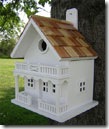
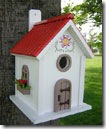
In 1999, Home Bazaar set out to create the world's most spectacular line of birdhouses and bird feeders.  Yardiac.com is pleased to introduce to you the HomeBazaar1Home Bazaar Line of architectural birdhouses and feeders, each designed with painstaking attention to detail.  They are fully functional for outdoor use but are also very enjoyable indoors.  Home Bazaar designs are most recognized for their cottage style combined with the Victorian scrollwork. 

Houses (excluding purple martin houses) are designed to accommodate common cavity dwellers such as Wrens, Finches, Chickadees, Nuthatches,Titmice, homeBazaar2and other feathered friends.

Western red cedar or pine shingles adorn Home Bazaar roof tops. Exterior grade ply-board is used in construction of the walls, floor and underlying roof board and kiln-dried hardwoods,pine and poly-resin make the details. Outdoor, non-toxic paint is used to finish these exquisite houses and feeders.  Rest assured that no chemicals or sealants that can be harmful to wildlife are used in the making of Home Bazaar houses and feeders. 

Look for Home Bazaar houses and feeders in Better Homes & Gardens, The Stepford Wives, and more!

Wednesday, December 05, 2007

For the Birds

We all enjoy birds in our yard and then watching for their activities bring life to our garden. You can plant trees and shrubs to provide food, shelter, and nesting sites, for a wide variety of birds. The following is a list of some of the favorites of our fine-feathered friends.
Trees Perennials
Ash Hemlock Aster
Birch Maple Coresopsis
Cherry Oak Globe Thistle
Crabapple Pine Purple Coneflower
Dogwood Spruce Rudbeckia
Hawthorne Sweet Gum Ornamental Grasses
Shrubs
Bayberry Honey suckle
Blackberry Juniper
Blueberry Mugho Pine
Burning Bush Viburnum
Holly Yew
Don't forget to feed your birds in the winter. Often, we neglect our feeders when it is cold out, but this is when food is more scarce!

Wednesday, November 07, 2007

Feeding the Hummingbirds

Feeding hummingbirds can be a lot of fun. There is not much time left, in this season, for feeding them, depending on where you are located. However, thinking ahead never hurt anyone. Here's a few tips, to get you started. Don't forget to share your own experiences. You can see a video that was submitted, by one of our readers. Mixing the nectar is very basic. Just use one part sugar to four parts water, and stir until the sugar is dissolved. (Never use honey!) Bring it to a boil, on the stove, to kill the bacteria. This will also allow you to safely preserve the nectar for a couple of days, in the fridg. It will usually be fine, up to one week. Once the nectar is cool, fill the feeders. Be sure not to over fill, based on the amount of birds you have. The nectar will only last for about one or two days, outdoors. If it begins to look cloudy, change sooner. Placing the feeder in bright sun light is the best place to hang your feeder, as far as the birds are concerned, but hanging it in the shade will slow down fermentation. You do not need to add red food coloring. A brightly colored feeder will do the trick. Cleaning your feeder is a snap. Just use vinegar and water. Stay away from bleach, and detergents which can leave a residue. To keep the bees, wasps, and ants away can be a real challenge, sometimes. One suggestion is to spray the hanger with cooking oil. (This will make a mess for you later, though.) Another good idea is to look for a feeder with an ant moat, or bee guards. You will continue to see the hummingbirds until the insects are gone. This is their primary source of food, of course. As long as you have an audience, continue to offer the nectar. After the freeze, you will want to take it in.

Thursday, September 20, 2007

Organic Gardening Tips & FAQs

Frequently asked questions Can you recommend any "vegetarian" fertilizers that do not contain animal by-products? There are a number of excellent plant-based fertilizers you can try. These include alfalfa pellets (5-1-2); kelp meal (1.5-.5-2.5); and seaweed liquid (.1-.1-1.0). The numbers in parenthesis after each product name indicate its nitrogen-phosphorus-potassium (N-P-K) ratio. How can I improve my clay soil? Soil preparation is very important to a successful garden or landscape. In clay or heavy soil it is advisable to add lots of well-rotted compost to help break up heavy soil particles, introduce microbial activity, add nutrients, and improve drainage. To sustain these positive benefits, you will need to amend your soil regularly throughout the life of the garden. Making your own compost is a good way to keep a supply on hand year-round. You can also improve clay soil by planting cover crops, also known as green manures, in the winter. Alfalfa, buckwheat, and white clover are all cover crops that loosen and add nitrogen to the soil. Rather than working with your existing soil, you might also consider constructing raised beds and filling them with a good-quality, all-purpose potting mix. Whichever method you try, do not work with clay soil when it is wet as this forces the particles closer together. Compaction restricts proper gas exchange, the percolation of moisture and the normal growth of roots. Are there any harmful side effects to using newspaper as a mulch? Any risks from the slight amount of heavy metals present in the ink of daily newspapers are extremely remote. In fact, one environmentalist stated that to have any ill effect at all, you would have to eat twelve complete Sunday newpapers in one sitting! Newspapers are a great way to mulch your garden for weed control. Use a thick layer (no slick inserts) under your mulch and you will eliminate weed problems. Any that do appear are very easy to pull. The paper will break down over time, adding organic material to your soil. The following tips will help you maintain a healthy garden Ensure that plants are healthy before adding them to your garden beds to avoid introducing pests or disease spores. Water wisely Avoid overhead watering to prevent disease spores from washing onto healthy foliage. Using drip irrigation equipment not only prevents the spread of disease, but also helps to conserve water. Allow the soil to dry slightly between waterings to prevent fungal infections. Do not work among plants when they are wet to avoid the spread of water-borne diseases. Remove and destroy severely infected plants or plant parts to avoid spreading diseases to healthy plants. Do not compost infected material. Clean your cutting tools with rubbing alcohol or a weak bleach solution between cuts when pruning diseased foliage. Space plants widely to allow good air circulation. Crowded plants also tend to be weak and spindly, making them targets for pests and diseases. Incorporate compost into the soil to introduce beneficial soil organisms and improve drainage. Fertilize properly Nutrient deficiencies and imbalances make plants more attractive to pests. Overfertilization with nitrogen can cause lush, tender growth that attracts sucking pests such as aphids. Controlling pests and diseases Despite your best efforts to prevent pests and diseases, infections and infestations may sometimes occur. The least harmful way to combat these intruders is through physical controls. Install barriers, such as floating row covers, fences, netting, cutworm collars, and copper barrier tape, to protect your plants from future infestation or infection. Traps and repellents are other low-impact options for foiling insect and animal invaders. If mechanical methods do not solve the problem, the next option is biological control. There are a number of biological control options available to the home gardener. Attract beneficial insects by creating a diverse ecosystem. Plant small-flowered nectar plants such as alyssum and dill to provide an additional food source for beneficials. Attract pest-eating birds, by placing birdhouses, birdbaths and feeders near your garden. Bacillus thuringiensis (Bt) is a naturally occurring bacterium that acts as a stomach poison when consumed by certain pests, but it is harmless to beneficial insects. Milky spore is a bacterial disease that specifically targets Japanese beetle larvae. Beneficial nematodes, microscopic soil-dwelling organisms, parasitize many harmful insect larvae. The adage "An ounce of prevention is worth a pound of cure" also holds true in the garden. With proper maintenance, you can virtually eliminate pest and disease problems before they start.

Thursday, January 25, 2007

Mosquito Facts & West Nile Virus Update

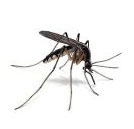
Mosquito Facts Mosquito, the name is Spanish for little fly. There are 3000 different kinds of mosquitoes and a worldwide population of 100 trillion!! Most are in tropical climates, but there are mosquitoes in arctic and desert regions. They can fly up to 10 mph, dart between raindrops and even fly backwards. Most live and die close to where they hatch, but some are strong flyers that travel many miles in search of a victim. Only female mosquitoes bite. They require a blood meal in order to develop eggs to make more mosquitoes. Most female mosquitoes lay their eggs on standing water. Stagnant ponds, ditches, and fresh, or salt, water wetlands are favorites, but even a few tablespoons of water in a flower pot or old auto tire will do. The eggs hatch, become swimming larvae, then pupae and finally flying adults. Mosquito larvae are an important source of food for certain fish, birds, bats and other animals. To reduce Mosquito infestation we recommend using Mosquito Bits or Mosquito Dunks. A SkeeterVac is a long term and highly effective solution for eliminating mosquitoes. Skeeter Vac's patent pending scientifically proven technology creates an atmosphere biting mosquitoes can't resist: warmth, water vapor, carbon dioxide and odorants. Then it finishes off the job by trapping and killing those biting pests so your outdoor experiences are safer and more enjoyable. What's being done about Mosquitoes and what you can do In their quest for blood, mosquitoes may bite birds, frogs, snakes, and mammals, including people. Some, called peridomestic mosquitoes, actually live, and breed, around homes just to be near us. Twenty-four hours or so after hatching, a female mosquito flies off in search of a meal. She homes in on body warmth, odor, moisture and the carbon dioxide we exhale. When she bites, the mosquito injects a bit of saliva that slows coagulation so blood flows freely. It's your body's allergic reaction to the saliva that caused the welt and itching sensation. Mosquitoes can also transmit canine heartworm, which is fatal to dogs once contracted. For protection, pet owners can purchase a preventative medicine from their veterinarian. Generally, the trend in the U.S. is away from spraying adult mosquitoes with chemicals. Whenever possible, government health authorities control large tracts of mosquito breeding land by larviciding. They use low toxicity biopesticides like B.T.I.(Bacillius thuringiensis subspecies israelensis), a live bacteria that's deadly to mosquito larvae, harmless to other living things. The mosquito that bit you last night may have hatched in the birdbath right in your own back yard. At home or with school or community groups, you can effectively reduce mosquito problems using common sense and environmentally-conscious methods. Organize a neighborhood cleanup. Its great community project that will eliminate lots of potential mosquito breeding spots and improve the view! Look for places where rainwater collects and stands. Old car tires, drain flower pots, children's wading pools and tree holes. Goldfish and fresh water minnows (Gambusia affinis) will both eat mosquito larvae. Microbe Lift is an ideal supplement to protect pond areas for excessive mosquito hatchlings. Check with your local mosquito control agency about availability and local regulations. Flush birdbaths and fountains weekly. Clean clogged gutters and drains, cover cesspools. To Humans and domestic animals, mosquitoes are a nuisance and a health hazard since mosquitoes can transmit a variety of diseases. Fortunately Yardiac.com is there to help and protect you from the health risk mosquitoes present. When you can't flush or drain stagnant pools, low-lying wet areas, tree holes, unused swimming pools and rain barrels, use a B.T.I. product like Mosquito Bits or Mosquito Dunks.

Wednesday, January 24, 2007

How to Photograph Birds

One of the biggest challenges faced by the bird photographer is getting close enough to the subject to be able to produce a good image. The easiest (though also the most expensive) solution to this problem is to work with a telephoto lens. Most professional bird photographers, in fact, often use a 500mm or 600mm telephoto lens, sometimes coupled with a teleconverter (a device that extends the lens focal length). But for amateur photographers who want to photograph birds without buying a lot of expensive equipment, there are always other methods and options. If you're going after the Andean Condor, you're going to need a telephoto lens to get the shot, said Chuck DeLaney, Dean of NYI, America's oldest and largest photography school. But if you're mainly interested in photographing birds in your region, maybe just in your backyard, there are still plenty of options, like using a blind for getting good photos. One strategy, employed quite cleverly by an NYI graduate, is particularly well-suited for the backyard bird photographer. To capture songbirds (who are notorious for their quick, erratic movements and thus difficult to photograph), she positions her Canon SLR near a feeder, sets the focus, aperture, and shutter speed, then retreats to the porch. She waits there until a bird comes to the feeder, then, when the moment is right, she uses her infrared control to trigger her camera's shutter. Birds approach her feeders and backyard perches because she is out of sight, and, as a result, she's able to get closer shots without using a telephoto lens. For more great suggestions on how to take bird photos, and lots of great photos, see the official Web site of the New York Institute of Photography. (Reprinted with permission from the New York Institute of Photography Web.) Another great source of Bird Photograpy is the North American Birds Photo Gallery.

Wednesday, December 27, 2006

Select a Birdfeeder

You've decided to buy a bird feeder; or maybe you're looking for a new squirrel resistant design. It can be a challenge to decide which feeder is right for you. The best place to start is by, first, looking at where you plan to feed the birds. While there are many factors that influence your ability to attract birds, the most important have do with: Where you live (city, suburbs, country, or coastal) The attractiveness of your neighborhood or yard to the birds (trees, shrubs and flowers), The availability of food and water. You'll find that city dwellers will be far more limited, in the numbers, and kinds of birds they can attract than country, or suburban, living. Just as important are the numbers, and kinds of vegetation in your area. Birds are attracted to environments that provide natural protection, places fornesting, and food and water. You can improve your chances for success by enhancing your feeding site with plantings, in addition to offering the birds a reliable source of water and food. Having surveyed your home, the next step is to select the style of your feeder. Review Yardiac.com's Bird Feeder Collection. We have the best selection, around!