 Stacked Stone is one of the most popular materials used by lansdscape designers today. In order to keep up with this trend many many companies are developing a outdoor accents to match. One of the more popular is our Stacked Stone Columns.
You can achieve the classic design of expensive masonry without the need for special equipment, a mason or the extreme cost. Cast stone columns are an upscale alternative to typical fence mounting options and can be used with ornamental gates, including automatic electric gates, to display signage or attach decorative lighting.
Stacked Stone is one of the most popular materials used by lansdscape designers today. In order to keep up with this trend many many companies are developing a outdoor accents to match. One of the more popular is our Stacked Stone Columns.
You can achieve the classic design of expensive masonry without the need for special equipment, a mason or the extreme cost. Cast stone columns are an upscale alternative to typical fence mounting options and can be used with ornamental gates, including automatic electric gates, to display signage or attach decorative lighting.
Showing posts with label Outdoor Living. Show all posts
Showing posts with label Outdoor Living. Show all posts
Tuesday, September 15, 2009
Stacked Stone Columns
Stacked Stone is one of the most popular materials used by lansdscape designers today. In order to keep up with this trend many many companies are developing a outdoor accents to match. One of the more popular is our Stacked Stone Columns.
You can achieve the classic design of expensive masonry without the need for special equipment, a mason or the extreme cost. Cast stone columns are an upscale alternative to typical fence mounting options and can be used with ornamental gates, including automatic electric gates, to display signage or attach decorative lighting.


Friday, September 11, 2009
Deck Torch on Steroids
Looking for a BIG Flame - check out Yardiac's Big Wave Patio Torch. We travel to all of the industry trade shows and this is truly the largest flame we have ever seen on a Patio Torch. It is the  worlds first garden torch using the "Advanced Burning Control" technology. It was engineered by Denmark's Pipe-Line and uses a patented combustion chamber.
The Big Wave Torch provides a fantastic and unique bon fire in your garden, which with the simple click of a lighter, creates ambience and an all year round eye catcher. The ABC technology allows a very clean and minimum-smoking torch without the hazard of flying embers and sparks. Big Wave torches are also equipped with a click lock for added safety if the torch falls over. The flame is easily extinguished with the snuffer which also keeps the durable fiberglass wick dry and ready for use in all weather conditions.
worlds first garden torch using the "Advanced Burning Control" technology. It was engineered by Denmark's Pipe-Line and uses a patented combustion chamber.
The Big Wave Torch provides a fantastic and unique bon fire in your garden, which with the simple click of a lighter, creates ambience and an all year round eye catcher. The ABC technology allows a very clean and minimum-smoking torch without the hazard of flying embers and sparks. Big Wave torches are also equipped with a click lock for added safety if the torch falls over. The flame is easily extinguished with the snuffer which also keeps the durable fiberglass wick dry and ready for use in all weather conditions.
worlds first garden torch using the "Advanced Burning Control" technology. It was engineered by Denmark's Pipe-Line and uses a patented combustion chamber.
The Big Wave Torch provides a fantastic and unique bon fire in your garden, which with the simple click of a lighter, creates ambience and an all year round eye catcher. The ABC technology allows a very clean and minimum-smoking torch without the hazard of flying embers and sparks. Big Wave torches are also equipped with a click lock for added safety if the torch falls over. The flame is easily extinguished with the snuffer which also keeps the durable fiberglass wick dry and ready for use in all weather conditions.
Tuesday, May 26, 2009
Choosing the Best Wood for Your Home Furnishings
If you are looking for patio furniture, your head may be spinning. There are more choices now than ever before, it seems. Here are a few pointers that will set you on the right path: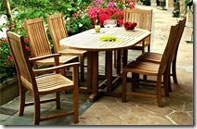
FSC Certified means that the item you are looking at is certified by the board of the Forest Stewardship Council. The FSC sets forth principles, criteria, and standards that span economic, social, and environmental concerns. The FSC standards represent the world’s strongest system for guiding forest management toward sustainable outcomes.
Reclaimed wood is a great alternative. Look for this verbiage when buying any wooden item. This phrase means that the product is made of scraps, rather than new wood.
Softwood refers to the wood from needle bearing trees. Hardwood describes wood from trees having broad leaves. This is not to be confused with the texture of the wood itself.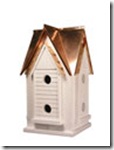
- Willow, cypress, alder and other trees with pliable branches are commonly used for bent-twig furniture. Willow is especially renewable. When it is cut, two or more shoots will grow out of the stump of the cut piece. If you use twig furniture outdoors, spray or brush on a good quality clear exterior varnish and use the furniture only in a protected area.
- Pine is an affordable softwood that is harvested in several varieties from around the world. It is most commonly from American forests. All are yellow with brown knots and are perfect for staining. Pressure-treated pine will last for 20 years but untreated pine has low rot-resistance. It needs to be painted, stained or sealed and stored inside in the winter.
- Tropical eucalyptus is a native of Australia and is prized for its resistance to rot and handsome attributes. It will last decades. Tropical hardwoods will safely weather to a silvery finish over time. To preserve the original color simply treat twice a year with teak or other furniture oil.
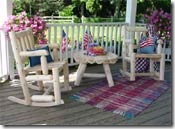
- Roble is a golden, relatively lightweight hardwood harvested mainly from dry tropical forests in South America. It will last up to 25 years.
- Shorea, grown in Indonesia and Malaysia, is stronger and heavier than teak but because of the large quantity available, is usually priced lower. Both jarrah wood and shorea will last up for up to 50 years.
- Jarrah has a reddish or pinkish color and is harvested in Australia from government-managed forests to ensure reforestation.
- Teak is the most desired of all outdoor furniture woods for its honey brown hardwood that is highly resistant to rot and decay. It will last more than 50 years, even if left outdoors year-round. Teak is now harvested primarily from plantations in Southeast Asia. Dwindling stocks and high consumer demand have combined to make the price of teak soar.
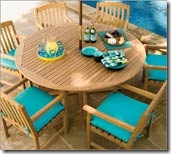 The high price of teak has made other tropical hardwoods, such as roble, shorea, jarrah and eucalyptus popular. All of these woods are dense, durable, and stand up well to weather.
 - Cedar is a North American softwood, light in color and naturally splinter free. It resists insects, mold, mildew and decay, and it weathers well. With proper care, it can last 25 years. Since cedar is a quick grower, it's a resource that renews relatively quickly.
Monday, December 01, 2008
Energy Efficient Grills
Over the years, an unfortunate grill energy story has evolved - gas grill value became synonymous with BTU levels and the number of controls on the grill. Multiple burner grills with higher BTU consumption were slotted with higher retail prices. While this has created perceived value, it in fact 
According to the Hearth Patio Barbeque Association, there are (115 million households in the US - 77% have a grill or a smoker - 98% of those own a grill and 68% of those are gas grills). In total, there are approximately 59 Million gas grills owned by households in the US. The consumption story is:
CONSIDERING THE FACTS:
• There are 59 million grills in the US
• Average BTU usage is 60,000 BTUs/hour
• Consumers grilling twice a week would have an annual consumption of 6,240,000 BTUs 
• There are 5,900,000 BTUs per barrel of crude oil
PROBLEM:
• A 60,000 BTU grill used two hours a week = a barrel of crude oil = 60Million barrels of crude oil/year.
SITUATION SOLUTION:
• Reducing energy consumption lead to the development of Cook Number® Gas Grills. Their consumption is half, or less than the average gas grill. If the US market shifted to Cook Number Gas Grills using just 30,000 BTUs/hour or equally efficient ones, we would save 30Million barrels of crude oil/year.
$$ SAVING $$
This would save the US about $3Billion dollars in crude oil (priced at $100 per barrel).

Switching to the energy- efficient Cook Number Electric Grills or to the iQ-250 Gas Grill (8,000 BTUs/hr), annual savings would be four times as great! • In the ideal world, a consumer would also have an electric or the iQ-250 (along with their large gas grill) and use it when only cooking for 2-4 people. This alone could result in dramatic savings.
Friday, November 21, 2008
How to Deep Fry a Turkey - Tips and Warnings
Tips & Warnings:
- The oil will splatter when you fry the turkey, so wear old clothes.
- You can inject the turkey with marinade the night before by using a turkey injector kit.
- Buy the oil from a wholesale grocer to save money.
- Use a turkey that weighs 14 lbs. or less.
- Season the carved turkey with salt, pepper, hot pepper sauce and lemon wedges.
- Dry the turkey well, because a wet turkey will splash dangerously when placed in oil.
- Do not deep fry the turkey in an attached building, such as a garage or on a wooden deck.
- Make sure you have enough propane to last the entire frying time, about 40-50 minutes for a 10-14 lb. bird.
- Keep an eye on the frying bird at all times.
- First time you fry a turkey, have a simulation fry using water instead of oil. Dunk your turkey in the water and take it out. Mark where the water line is so you don't put too much oil in the fryer and end up with overflow of oil.
- Turkey can be fried in pieces too. Cut it the same way you would a chicken, sprinkle it with Old Bay Seasoning® before frying. The seasoning adds a hint of flavor and a deep color to the outer skin and meat.
- The oil temperature will drop when you place the turkey in the peanut oil. Let it fry for 10-12 minutes and the temperature should go back up to 365ºF. If not, carefully increase the gas flow until the temperature starts to rise back to 365ºF.
- Freeze the oil for the best long term usage.
- Fry more than one turkey with the leftover oil. Get some friends together and fry chickens, pork loins, etc.

Enjoy!
Saturday, October 25, 2008
Energy Saving Tips on Outdoor Lighting
Outdoor lighting is useful for adding security and charm to your home's exterior. But when overdone, it can be costly to operate. Fortunately, there are several steps that can be taken to reduce your energy consumption when it comes to outdoor lighting. Here are some suggestions:
Replace standard current lighting with low-voltage lighting. Low-voltage lighting kits come with transformers that safely reduce standard household current (120V) to a much lower level (12V) for lighting. This works well for secondary or pathway lighting.
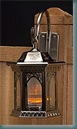 Go a step further by switching to solar powered outdoor lights. These lights are easy to install and are environmentally friendly because they provide free, renewable energy by means of photovoltaic cells that convert streaming daylight into stored electricity. The stored energy is then released at night when the sun is no longer supplying power to it. These are particularly useful in remote areas where utility service is not easily accessed.
Outdoor lights that are left on all night may unnecessarily waste 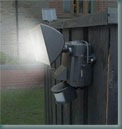 energy and disturb wildlife. Therefore, reduce the amount of time lights are on, but not being used, by installing motion-activated fixtures or plug-in outdoor timers. Solar powered motion sensors and low voltage lighting kits on timers will increase your energy savings even more.
Use tube fluorescent and energy efficient compact fluorescent lights (CFLs) in fixtures not exposed to water or moisture. Although CFLs cost a bit more initially, they pay for themselves by the energy they save over their lifetime, which is significantly longer than incandescent bulbs. Be sure, though, to buy a lamp with a cold weather ballast if you live in a cold climate, since standard CFLs may not work well below 40°F.
Also consider high-intensity discharge (HID) or low-pressure sodium lights. However, both HID lighting and low-pressure sodium lamps require up to ten minutes to start and have to cool before they can restart, so they are not suitable for use with motion detectors. They are most suitable for applications where they stay on for hours at a time. 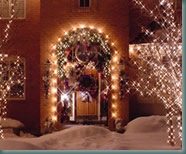
Finally, light emitting diodes (LED) are highly energy efficient and work especially well for holiday lighting.
Friday, September 19, 2008
The Green Grilling Story
The first truly “green” grills have hit the market. Fire Stone Cook Number Grills are here and are making big news. Combining the latest electronics with convection technology and patented single-burner efficiency, Fire Stone’s new grills make 30,000 BTUs cook as efficient 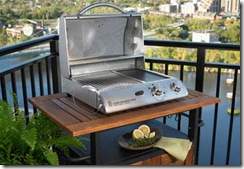 as a train engine.
“With today’s energy concerns, telling people they need grills with multiple burners and higher gas consumption is ridiculous.” says Fire Stone owner and President Dan Shimek. “It’s time consumers demanded high performance and high gas ‘mileage’. That’s what Cook Number grills can give them right now.”
There are an estimated 60 million gas grills in the US.* If they were all performing at the efficiency of Fire Stone Cook Number Grills, the US would save 30 million barrels of crude oil per year– that’s over $3 Billion dollars in crude oil. On top of that, consumers only need to fill their LP tanks half as often. This would save about $6 billion in gas purchases (at $20 per LP tank). What’s more, Fire Stone makes an energy-efficient, electric Cook Number grill that runs on ordinary househould current. If consumers switched to electric grills, the annual savings would be about four times as great. Add to that the fact that multiple burners means multiple components can go bad and it’s obvious that a change in consumer perception is needed. Fire Stone Cook Number Grills have what it takes to make green grilling really take off. Yardiac.com is proud to be in partnership with Fire Stone to bring you today's best grills!
* Hearth Patio and Barbecue Association figures.
Monday, August 04, 2008
Classy Evening Entertaining
Using crus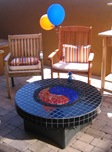 hed glass in a Natural Gas or Liquid Propane fire pit adds beauty, intrigue, and style to any patio. It is very easy and fast to install, and you will be very satisfied with the results.
The options are endless! American Fireglass provides a multitude of colors and size options allowing you to create a custom design. The glass is tempered for long-term heat consumption. Thanks to the process used in creating the glass, it burns cleaner and more efficiently than conventional gas logs. It will not melt, degrade, or emit toxic fumes. (This refers to the glass itself. You are still required to have your damper open when burning!) The fireglass will last virtually a lifetime. There is no soot, no ash and no smoke. With no popping embers to worry about, you can even remove those screens and glass doors that hinder your view. Then watch the colors dance! Now if you think this looks good in your fireplace, it is a show-stopper in an outdoor fire pit or as a decorative feature in your patio landscape.
The tumbling and polishing process used to create the FireglassTM ensures that there are no sharp edges and almost anyone can install it. Simply remove those old gas logs and clean out your fireplace. Wipe the surfaces clean with a dry cloth to remove any dust. Check your burner to 
An average fireplace will take between 50 and 75 lbs of glass. Using lava rock as a filler can cut down on the amount of glass needed and give you the same look. However, if you want to change the color for a party or on holidays, an all-glass installation is best. To calculate the amount of American FireglassTM you will need for your fireplace, call a Yardiac Representative, or visit our calculate page. We suggest placing a 2"- 3" thick layer of FireglassTM to get the Proper flame.
You will find some companies selling glass that is not specially formulated for use in fireplaces or fire pits. Those products will burn over time and may be harmful to your health; So, buyer beware. Ask before you buy!
American FireglassTM is featured in some of the hottest nightclubs, restaurants and homes in the WORLD.
Thursday, July 31, 2008
Looks Like Wood. Feels Like Wood. Better Than Wood.
If it's not wood, then what is it?
This dist inctive line of patio furniture is made from a polyvinyl resin material. It will never rot, crack, warp, curl or craze. It's also UV ray proof, insect proof and 100% water and salt waterproof. It looks like wood, feels like wood, but it's better than wood.
Can this material be painted?
Yes, this entire collection can be painted with any kind of paint. However, we recommend Krylon Fusion™ for best results. Any premium exterior latex paint or spray paint such as Krylon™ is also acceptable.
I've heard some synthetics will break down eventually from exposure to the sun. Is this the case with the Ultimate Collection?
No, but many products made from recycled material will eventually break down with exposure from the sun because of the harmful ultra violet (UV) rays. This line is impervious to UV rays and will not break d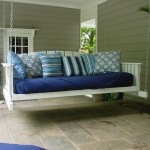 own; It comes with a lifetime warranty on material parts.
Are there toxins in the materials used to make this furniture, such as those used in pressure treated wood?
No, no toxins are used in the production of this collection . They are safe for everyone; The polyvinyl resin is a benign substance. That's one of the reasons we offer the Kiddie Adirondack for small children. -No toxins and no splinters.
Monday, February 25, 2008
Discover the Perfect Umbrella
There are many umbrellas to choose from and based on many different factors, Yardiac offset umbrella buying guide should ease you into our many different options and help narrow down the process. First and foremost customers should always consider the source in which you buy your umbrella. Yardiac.com has been selling offset umbrellas for over 10 years and offers the most comprehensive styles, shapes and color in the industry. We have  developed relationships with many different umbrella manufactures to make sure our customers are "covered" and thrilled with their purchase.
Offset Umbrella Selection Tips
Location It is always good to know where your location of your new umbrella is going, whether it be in on your deck, poolside, off the wall, or any other great places to put an offset umbrella. The location is the first determining factor of the shape, and size of your new umbrella. When measuring your location be sure account for the base which will normally be weighted down by 16" pavers or by a weighted base (water or sand) that is typically around 24"-36" in length.
Size and Shape
The next step is to determine how what shape and size you would like to fill your desired location. For some a round style will be suffice, while others a square may also meet their needs. When considering shape always be sure you are getting the coverage area you desire. Below is a chart that helps you determine the average coverage, depending on the shape of the umbrella. As you will see that sometimes although it may appear that an 11ft round or octagon umbrella is larger than a 10ft Square, you are actually be getting more coverage out of a 10 foot square model.
and Shape
The next step is to determine how what shape and size you would like to fill your desired location. For some a round style will be suffice, while others a square may also meet their needs. When considering shape always be sure you are getting the coverage area you desire. Below is a chart that helps you determine the average coverage, depending on the shape of the umbrella. As you will see that sometimes although it may appear that an 11ft round or octagon umbrella is larger than a 10ft Square, you are actually be getting more coverage out of a 10 foot square model.
and Shape
The next step is to determine how what shape and size you would like to fill your desired location. For some a round style will be suffice, while others a square may also meet their needs. When considering shape always be sure you are getting the coverage area you desire. Below is a chart that helps you determine the average coverage, depending on the shape of the umbrella. As you will see that sometimes although it may appear that an 11ft round or octagon umbrella is larger than a 10ft Square, you are actually be getting more coverage out of a 10 foot square model. Umbrella Size and Shape Coverage Chart
Color and Fabric For many this is the final step is choosing your umbrella. The color of your umbrella is going to be determined usually by the decor in which the umbrella will be accenting, Yardiac.com is pleased to offer up to 30 different color options, depending on the model of your choice.. The nice part about choosing a color, is that the canopy is usually replaceable in the future if your decor changes, meaning all you have to do is simply buy a n ew cover. The fabric choice is also a long term choice as well. Buying a new umbrella no matter what style or color will most likely look the same out of the box no matter what fabric you so choose. The caveat to this is that after one season of use some fabrics will begin to fade as they are exposed to plenty of sun. All of Yardiacs fabrics are backed by a warranty that is listed with each umbrella. The best fabric on the market is Sunbrella, and bar none has the best warranty on the market today.
Pole
Selling umbrellas for many years has given us many experiences with many different types of umbrellas and a quick way to eliminate an umbrella when selecting, is to look at the pole specs. A cheap thin pole will ruin an umbrella experience in a heartbeat, no matter what other features. The pole of an offset umbrella requires a lot of strength and stamina. All of Yardiac's umbrellas have been tested to standard, but some are thicker than others.
Tilting
 This feature is especially important as we all the know that each location is unique in reference to the direction in which sunlight falls. Being able to tilt your umbrella allows you to directionally shade areas based on the sun, and also as the sun moves, tilt the umbrella accordingly. Make sure if the feature is listed on the umbrella, specs to be sure you are receiving a tilting offset umbrella Choose from our Yardiac Tilting Umbrellas
Rotation Having a rotating umbrella can be easily as important as a tilting umbrella. Being able to rotate your umbrella 360 degrees, will allow your offset umbrella to be more flexible and used more frequently. For example a customer can buy an offset umbrella, to cover a hot tub, but also be able to rotate the umbrella to cover the adjacent patio, deck, or pool. This feature should also be listed on all Yardiac umbrellas with this feature.
Ribs
The number of ribs an umbrella has will ultimately determine the longevity and  durability of your umbrella. 6 ribs is the absolute minimum you would like to see on an umbrella. 8 ribs is the ideal number of ribs on a an offset umbrella. Ribs will help stabilize your umbrella from wind gusts, distribute fabric weight more evenly as well as making the umbrella go up and down faster and easier.
Venting You will notice that most umbrellas will come with some sort of venting feature on the top of the umbrella. It will be mentioned in the specs if it does include some sort of vent top. Vent tops are important because not only do they provide ventilation to umbrella fabric, but also help prevent lift off (lift off is an event that occurs when a umbrella is left open on a windy day and your umbrella ribs either lift straight up or the umbrella is lifted from the base and flies into the yard). Vent tops are good, but double tops are even better protection against lift off.
Base
Offset umbrella bases come in many different shapes and sizes. Stand alone bases are traditionally distinguished with a T-bar look that requires 16"pavers to weigh th e base down. Those pavers can be purchases at most hardware or landscape stores. Other bases available based on the model in which you purchase. Weighted bases are also stand alone bases, that require sand or water to help weigh down the base. These bases are nice because no other material is needed to weigh the bases down after Yardiac delivers the Umbrella. Specialty bases are also available depending on the style in which you choose, those other bases can be ground mount, which uses cement to secure to the ground, deck mount, which screws into decking, as well as planter and wall
versions.
e base down. Those pavers can be purchases at most hardware or landscape stores. Other bases available based on the model in which you purchase. Weighted bases are also stand alone bases, that require sand or water to help weigh down the base. These bases are nice because no other material is needed to weigh the bases down after Yardiac delivers the Umbrella. Specialty bases are also available depending on the style in which you choose, those other bases can be ground mount, which uses cement to secure to the ground, deck mount, which screws into decking, as well as planter and wall
versions.
Friday, February 15, 2008
Learn about Grilling Safely on a Deck
 Fireplace grills are made for outdoor use, but what about on a deck. Better yet, what if the deck has a covered roof, but has open walls. These applications can be done as long as you have taken the correct precautions:
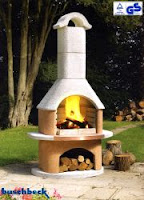
1.The deck should be rated for 400 lbs per square foot.
2. Position your grill on a stable and fireproof surface. If using a wooden deck, use some type of protective "flashing" to shield the wood deck from possible sparks or hot embers that could fall from the fire. You could use a grill pad or install some sort of tile.(an indoor fireplace should also be shielded from the floor by some type of hearth, ceramic tile, etc.).
3. Chimney extensions can be ordered to make the fireplace taller, if necessary, to extend through the roof opening.
 4.Proper insulation or separation (air space) should be employed between the chimney and the roof opening. Any licensed subcontractor who works on constructing the roof should be qualified to make this determination. The same considerations are made by carpenters building new homes (with indoor fireplaces) literally every day. The chimney does not get hot enough to be a problem unless the fireplace is overheated significantly with a fire that is much too big!
With this application you should also consider the following safety tips:
1. Always have a fire extinguisher on hand.
2. Never leave a burning product unattended, especially around children and pets, and make sure the fire is completely extinguished before leaving.
3. Check your local ordinances regarding outdoor wood burning.
4. When lighting or tending to the fire, make sure hair and clothing are away from the flame.
5. Burn only dry, seasoned wood (not treated wood) and make sure the smoke is not a nuisance to your neighbor
6.Keep all portable hearth products away from combustible material, e.g. outdoor furniture, pool towels, side of house, shrubs, etc.
7. Never use lighter fluid or gasoline to ignite your wood-burning product; use fire starters such as fibercones or lighting nuggets.
8. Be sure to make smores!
4.Proper insulation or separation (air space) should be employed between the chimney and the roof opening. Any licensed subcontractor who works on constructing the roof should be qualified to make this determination. The same considerations are made by carpenters building new homes (with indoor fireplaces) literally every day. The chimney does not get hot enough to be a problem unless the fireplace is overheated significantly with a fire that is much too big!
With this application you should also consider the following safety tips:
1. Always have a fire extinguisher on hand.
2. Never leave a burning product unattended, especially around children and pets, and make sure the fire is completely extinguished before leaving.
3. Check your local ordinances regarding outdoor wood burning.
4. When lighting or tending to the fire, make sure hair and clothing are away from the flame.
5. Burn only dry, seasoned wood (not treated wood) and make sure the smoke is not a nuisance to your neighbor
6.Keep all portable hearth products away from combustible material, e.g. outdoor furniture, pool towels, side of house, shrubs, etc.
7. Never use lighter fluid or gasoline to ignite your wood-burning product; use fire starters such as fibercones or lighting nuggets.
8. Be sure to make smores!
4.Proper insulation or separation (air space) should be employed between the chimney and the roof opening. Any licensed subcontractor who works on constructing the roof should be qualified to make this determination. The same considerations are made by carpenters building new homes (with indoor fireplaces) literally every day. The chimney does not get hot enough to be a problem unless the fireplace is overheated significantly with a fire that is much too big!
With this application you should also consider the following safety tips:
1. Always have a fire extinguisher on hand.
2. Never leave a burning product unattended, especially around children and pets, and make sure the fire is completely extinguished before leaving.
3. Check your local ordinances regarding outdoor wood burning.
4. When lighting or tending to the fire, make sure hair and clothing are away from the flame.
5. Burn only dry, seasoned wood (not treated wood) and make sure the smoke is not a nuisance to your neighbor
6.Keep all portable hearth products away from combustible material, e.g. outdoor furniture, pool towels, side of house, shrubs, etc.
7. Never use lighter fluid or gasoline to ignite your wood-burning product; use fire starters such as fibercones or lighting nuggets.
8. Be sure to make smores!Friday, November 09, 2007
Create the Best Outdoor Room
Well, gone are the days of mismatched, and barren patios. People live outdoors, just as much as  your patio just as throughly as your den. It can really be a lot of fun, too. Don't be intimidated. Just think of it like you would any other room in your home.
The first thing to do is settle on a color scheme. You can pick a pillow, or vase, or any other object with favorable colors, to work from. You may even want to get some fabric samples to work with. Keep in mind stationary colors, such as the color of your home, or shutters. Don't be afraid to use bright or bold colors. You want this to be a comfortable and enviting place your your whole family. It is also a great place for entertaining.
Decide what you would like to encorporate in your outdoor room, such as a cooking area. Outdoor kitchens are great, and it will add to the value of your home, as well, which could be very helpful in the future, should you decide to relocate.
Once you have established a color scheme theme, you can start shopping for ideas. Since you will be spending a lot of time in your outdoor room, take your time. Do a lot of window, or web, shopping, before you buy. There's a lot to choose from.
It's good to start out with a floor covering. Once you have a good sealer on th e floor, get an area rug. A good one will be mildew and mold resistant, and have UV inhibitors. They come in a variety of colors, and shapes. If you have beautiful or unique flooring, get a couple of accent rugs. If your deck is not attractive, get a full sized rug.
e floor, get an area rug. A good one will be mildew and mold resistant, and have UV inhibitors. They come in a variety of colors, and shapes. If you have beautiful or unique flooring, get a couple of accent rugs. If your deck is not attractive, get a full sized rug.
While you are looking for a floor covering, you can be looking for your patio furniture. When looking for furniture, you may want to find something with Sunbrella fabric. Sunbrella fabric is warrantied aginst color fading, longer than other fabrics. It will look great, for years. (Don't forget protective covers!) You will want it to coordinate, of course. You may want a sofa, a few end tables, and a conversation, or coffee table; Or, depending on your style, and space, maybe you would rather go for a bar,
or a dining set. Try to envision exactly what kind of entertaining you will be doing. Be sure not to crowd your space. You want your outdoor retreat to flow freely.

An outdoor television is a relatively new idea. Not many homes have one, but they can really add a lot to your patio.
Another great converstion piece is a fire pit. There is a wide variety, to choose from. In addition, you can design your own. Everything is so 'DIY' these days. You can  buy your own parts, build the surround yourself, out of materials used on your deck, and call a professional to connect it. It is the easiest way to tie everything in. A fire pit, or a patio heater will also lengthen the outdoor living season.
buy your own parts, build the surround yourself, out of materials used on your deck, and call a professional to connect it. It is the easiest way to tie everything in. A fire pit, or a patio heater will also lengthen the outdoor living season.
The next thing to think about is lighting. You don't need it to be as bright as indoor lighting, so don't get carried away. All you really need is a soft glow. You may want floor lighting, or overhead lighting, or both. The best way to use overhead lighting is to use a pergola.
Pergolas are a lot like an arbor, or trellis, in that they use lattice. It's great for wrapping, or hanging lighting, or anything else. A pergola will allow you to close off one side of your patio, which may be a good idea, if you are working in a small space. Pergolas are offered in a variety of wood, vinyl, fiberglass, and other materials.
of wood, vinyl, fiberglass, and other materials. Vinly is nice because there is virtually no maintenence. A quality vinyl pergola will come with a twenty year warranty. Vinyl may not compliment your design style. A wooden pergola may suite your patio better. They should also come with a substancial warranty. You may need to stain them, from time to time. They will also be a little heavier, so make sure, if you are putting it on a deck, that you have enough support. Some pergolas are metal. Metal gives a very classy look. You will definately want to seal those, every couple of years, for the best life. The bottom line is, there is a pergola for most any budget.
After you get your main fixtures, you can just decorate, like you would inside your home. If you have partitions, hang outdoor clocks, and thermometers.
The main point is, just have fun. You will be so glad you did. Your own private retreat will be just a few steps away. You will be able to enjoy what you thought only the rich and famous were allowed to have. There's nothing like the sanctuary of your own special place. Share your decorating tips with everyone!
Pergolas are typically adorned with vines, but don't feel limited. Use your imagination. So many accessories are available for outdoor living. Treat it like you would a wall in your home. Hang a few planters. Bring in a rug, some outdoor lamps, and your outdoor kitchen and bar, and you are all set. There's nothing like it.
away. You will be able to enjoy what you thought only the rich and famous were allowed to have. There's nothing like the sanctuary of your own special place. Share your decorating tips with everyone!
Pergolas are typically adorned with vines, but don't feel limited. Use your imagination. So many accessories are available for outdoor living. Treat it like you would a wall in your home. Hang a few planters. Bring in a rug, some outdoor lamps, and your outdoor kitchen and bar, and you are all set. There's nothing like it.
away. You will be able to enjoy what you thought only the rich and famous were allowed to have. There's nothing like the sanctuary of your own special place. Share your decorating tips with everyone!
Pergolas are typically adorned with vines, but don't feel limited. Use your imagination. So many accessories are available for outdoor living. Treat it like you would a wall in your home. Hang a few planters. Bring in a rug, some outdoor lamps, and your outdoor kitchen and bar, and you are all set. There's nothing like it.Saturday, February 17, 2007
General Grilling Safety
With more Americans lighting their grills than ever before, it’s important to remember that a fun barbecue is a safe barbecue.The following safety tips are designed to guide you through the grilling process. Remember, anytime you work with fire, there’s a chance of getting burned. So, take precautions. Common sense and planning will prevent injuries.
Read the owners manual.Always read the owners manual before using your grill and follow specific usage, assembly, and safety procedures. Contact the grill manufacturer if  you have specific questions. (Be sure to locate your model number and the manufacturer’s consumer inquiry phone number and write them on the front page of your manual.)
Grills are for outside, only.Barbecue grills are designed for outdoor use, only. Never barbecue in your trailer, tent, house, garage, or any enclosed area because carbon monoxide may accumulate and kill you.
Use in well-ventilated area.Set up your grill in an open area that is away from buildings, overhead combustible surfaces, dry leaves, or brush. Be sure to avoid high traffic areas and always barbecue in a well-ventilated area. Be aware of wind-blown sparks.
Keep grill stable.When using a barbecue grill, be sure that all parts of the unit are firmly in place and that the grill is stable (can’t be tipped over).
Follow electric codes.If electrically-operated accessories be used (rotisseries, etc.), be sure they are properly grounded in accordance with local codes. Electrical cords should be placed away from walkways or anywhere people can trip over them.
Use long-handled utensils.Use barbecue utensils with long handles (forks, tongs, etc.) to avoid burns and splatters.
Wear safe clothing.Wear clothing that does not have hanging shirt tails, frills, or apron strings that can catch fire, and use flame-retardant mitts when adjusting hot vents.
Keep fire under control.To put out flare-ups, either raise the grid that the food is on, spread the coals out evenly, or adjust the controls to lower the temperature. If you must douse the flames with a light spritz of water, first remove the food from the grill.
Be ready to extinguish flames.Use baking soda to control a grease fire and have a fire extinguisher handy. A bucket of sand or a garden hose should be near if you don’t have a commercial extinguisher.
Never leave a grill unattended once lit.
you have specific questions. (Be sure to locate your model number and the manufacturer’s consumer inquiry phone number and write them on the front page of your manual.)
Grills are for outside, only.Barbecue grills are designed for outdoor use, only. Never barbecue in your trailer, tent, house, garage, or any enclosed area because carbon monoxide may accumulate and kill you.
Use in well-ventilated area.Set up your grill in an open area that is away from buildings, overhead combustible surfaces, dry leaves, or brush. Be sure to avoid high traffic areas and always barbecue in a well-ventilated area. Be aware of wind-blown sparks.
Keep grill stable.When using a barbecue grill, be sure that all parts of the unit are firmly in place and that the grill is stable (can’t be tipped over).
Follow electric codes.If electrically-operated accessories be used (rotisseries, etc.), be sure they are properly grounded in accordance with local codes. Electrical cords should be placed away from walkways or anywhere people can trip over them.
Use long-handled utensils.Use barbecue utensils with long handles (forks, tongs, etc.) to avoid burns and splatters.
Wear safe clothing.Wear clothing that does not have hanging shirt tails, frills, or apron strings that can catch fire, and use flame-retardant mitts when adjusting hot vents.
Keep fire under control.To put out flare-ups, either raise the grid that the food is on, spread the coals out evenly, or adjust the controls to lower the temperature. If you must douse the flames with a light spritz of water, first remove the food from the grill.
Be ready to extinguish flames.Use baking soda to control a grease fire and have a fire extinguisher handy. A bucket of sand or a garden hose should be near if you don’t have a commercial extinguisher.
Never leave a grill unattended once lit.
 Consider placing a grill pad or splatter mat beneath your grill.These naturally heat resistant pads are usually made of lightweight composite cement or plastic and will protect your deck or patio from any grease that misses the drip pan.
Stay away from hot grill.Don’t allow anyone to conduct activity near the grill when in use or immediately following its use. The grill body remains hot up to an hour after being used.
Don’t move a hot grill.Never attempt to move a hot grill. It’s easy to stumble or drop it and serious burns could result.
These tips are not intended to be an exhaustive review of safety guidelines and should not be interpreted as precluding other procedures which would enhance safe barbecue grill operations. Issuance of these safety tips should not be construed as an undertaking to perform services on behalf of any party either for their protection or the protection of third parties. The Hearth, Patio & Barbecue Association assumes no liability for reliance on the contents of this information.
Consider placing a grill pad or splatter mat beneath your grill.These naturally heat resistant pads are usually made of lightweight composite cement or plastic and will protect your deck or patio from any grease that misses the drip pan.
Stay away from hot grill.Don’t allow anyone to conduct activity near the grill when in use or immediately following its use. The grill body remains hot up to an hour after being used.
Don’t move a hot grill.Never attempt to move a hot grill. It’s easy to stumble or drop it and serious burns could result.
These tips are not intended to be an exhaustive review of safety guidelines and should not be interpreted as precluding other procedures which would enhance safe barbecue grill operations. Issuance of these safety tips should not be construed as an undertaking to perform services on behalf of any party either for their protection or the protection of third parties. The Hearth, Patio & Barbecue Association assumes no liability for reliance on the contents of this information.
you have specific questions. (Be sure to locate your model number and the manufacturer’s consumer inquiry phone number and write them on the front page of your manual.)
Grills are for outside, only.Barbecue grills are designed for outdoor use, only. Never barbecue in your trailer, tent, house, garage, or any enclosed area because carbon monoxide may accumulate and kill you.
Use in well-ventilated area.Set up your grill in an open area that is away from buildings, overhead combustible surfaces, dry leaves, or brush. Be sure to avoid high traffic areas and always barbecue in a well-ventilated area. Be aware of wind-blown sparks.
Keep grill stable.When using a barbecue grill, be sure that all parts of the unit are firmly in place and that the grill is stable (can’t be tipped over).
Follow electric codes.If electrically-operated accessories be used (rotisseries, etc.), be sure they are properly grounded in accordance with local codes. Electrical cords should be placed away from walkways or anywhere people can trip over them.
Use long-handled utensils.Use barbecue utensils with long handles (forks, tongs, etc.) to avoid burns and splatters.
Wear safe clothing.Wear clothing that does not have hanging shirt tails, frills, or apron strings that can catch fire, and use flame-retardant mitts when adjusting hot vents.
Keep fire under control.To put out flare-ups, either raise the grid that the food is on, spread the coals out evenly, or adjust the controls to lower the temperature. If you must douse the flames with a light spritz of water, first remove the food from the grill.
Be ready to extinguish flames.Use baking soda to control a grease fire and have a fire extinguisher handy. A bucket of sand or a garden hose should be near if you don’t have a commercial extinguisher.
Never leave a grill unattended once lit.
Consider placing a grill pad or splatter mat beneath your grill.These naturally heat resistant pads are usually made of lightweight composite cement or plastic and will protect your deck or patio from any grease that misses the drip pan.
Stay away from hot grill.Don’t allow anyone to conduct activity near the grill when in use or immediately following its use. The grill body remains hot up to an hour after being used.
Don’t move a hot grill.Never attempt to move a hot grill. It’s easy to stumble or drop it and serious burns could result.
These tips are not intended to be an exhaustive review of safety guidelines and should not be interpreted as precluding other procedures which would enhance safe barbecue grill operations. Issuance of these safety tips should not be construed as an undertaking to perform services on behalf of any party either for their protection or the protection of third parties. The Hearth, Patio & Barbecue Association assumes no liability for reliance on the contents of this information.Friday, February 16, 2007
Fun Facts About Barbecue
Who barbecues
Northeasterners are the biggest barbecuers in the nation, followed by those in the North Central, Southern and then Western parts of the country.
 Barbecues have been a White House tradition since Thomas Jefferson. Lyndon B. Johnson, the 36th president of the United States, hosted the first barbecue at the White House that featured Texas-style barbecued ribs. Jimmy and Rosalyn Carter hosted a “pig pickin’” for about 500 guests including visiting foreign dignitaries. Ronald and Nancy Reagan also were avid barbecuers who entertained with barbecues at their ranch. George H. Bush, 41st president, held a barbecue for Members of Congress annually on the South Lawn of the White House, a tradition continued by his son, President George W. Bush. However, that tradition was interrupted on September 12, 2001, the day after the terrorist attacks on the World Trade Center and the Pentagon. Secret Service agents, who had evacuated the White House a day earlier, cancelled the barbecue and the White House kitchen released 700 pounds of beef tenderloin to feed the hundreds of rescue workers who had traveled to Washington.
 Natural lump charcoal costs a bit more than charcoal briquettes but it burns hotter, which means you use less – and partially burned natural lump charcoal can be reused. Briquettes work better for long cooking periods and they produce more consistent heat.
It’s easy to check how much propane is remaining in your tank. Bring your bathroom scale outside and put the tank on it. An empty tank weighs between 17 and 19 pounds. . The difference between that and what your tank weighs is how much gas you have left.
Natural lump charcoal costs a bit more than charcoal briquettes but it burns hotter, which means you use less – and partially burned natural lump charcoal can be reused. Briquettes work better for long cooking periods and they produce more consistent heat.
It’s easy to check how much propane is remaining in your tank. Bring your bathroom scale outside and put the tank on it. An empty tank weighs between 17 and 19 pounds. . The difference between that and what your tank weighs is how much gas you have left.
Barbecues have been a White House tradition since Thomas Jefferson. Lyndon B. Johnson, the 36th president of the United States, hosted the first barbecue at the White House that featured Texas-style barbecued ribs. Jimmy and Rosalyn Carter hosted a “pig pickin’” for about 500 guests including visiting foreign dignitaries. Ronald and Nancy Reagan also were avid barbecuers who entertained with barbecues at their ranch. George H. Bush, 41st president, held a barbecue for Members of Congress annually on the South Lawn of the White House, a tradition continued by his son, President George W. Bush. However, that tradition was interrupted on September 12, 2001, the day after the terrorist attacks on the World Trade Center and the Pentagon. Secret Service agents, who had evacuated the White House a day earlier, cancelled the barbecue and the White House kitchen released 700 pounds of beef tenderloin to feed the hundreds of rescue workers who had traveled to Washington.
When we barbecue The most popular holidays for barbecuing are, in order, July 4th (75%), Memorial Day (65%), and Labor Day (55%).
What we barbecue The most popular foods for barbecuing are, in order: hamburgers (87%), steak (83%), chicken (78%), and hot dogs (76%).. The most commonly prepared side dishes are, in order, corn (42%), other vegetables (41%), and potatoes (39%). The most popular flavors of barbecue sauce are hickory (67%), followed by mesquite (52%), honey (48%), and then tomato-based (34%). The most common ingredient added to barbecue sauce is garlic, followed by brown sugar. There are about as many styles of barbecuing as there are opinions - everyone's got their own! Generally speaking, though, there are barbecue styles that dominate in different regions of the country. In the Carolinas, they can't agree whether sauce should be vinegar, mustard or tomato based, but they can agree on the meat the sauce goes on - pork. In the Deep South, Georgia, Florida, and parts of Louisiana, you'll find that Cajun cuisine has had a strong influence. Regardless of whether you're barbecuing beef brisket, pork ribs, rabbit, or trout, chances are your taste buds will get a kick from a spicy marinade, sauce, or rub. In other parts of the South, pork also rules. In sunny California, lighter fare such as salmon is king of the grill. The Midwest is a barbecue hotbed - if you can't find a meat and sauce combination you like in Kansas City, you can't find it anywhere. Aluminum foil is the most common "utensil" used in the preparation of side dishes for the grill. The most popular barbecue utensils are long-handled tongs (81%), followed by grill cleaning brushes (75%), and then long-handled forks and spatulas (tied at 64%).
Our Fuels
Ellsworth B. A. Zwoyer of Pennsylvania patented a design for charcoal briquettes in 1897. After World War One, the Zwoyer Fuel Company built charcoal briquette manufacturing plants in the United States with plants in Buffalo, NY and Fall River, MA. There are stories circulating that Henry Ford invented the very first briquette in 1920 with the help of Thomas Edison. However, the 1897 patent obviously predates this and Ford and Edison both knew Zwoyer.
Natural lump charcoal costs a bit more than charcoal briquettes but it burns hotter, which means you use less – and partially burned natural lump charcoal can be reused. Briquettes work better for long cooking periods and they produce more consistent heat.
It’s easy to check how much propane is remaining in your tank. Bring your bathroom scale outside and put the tank on it. An empty tank weighs between 17 and 19 pounds. . The difference between that and what your tank weighs is how much gas you have left.
Barbecue History
There is no definitive history about how the word “barbecue” originated – or why it’s sometimes used as a noun, verb, or adjective. Some say the Spaniards get the credit for the word, derived from their “barbacoa” which is an American-Indian word for the framework of green wood on which foods were placed for cooking over hot coals. Others think the French were responsible, offering the explanation that when the Caribbean pirates arrived on our Southern shores, they cooked animals on a spit-like devise that ran from “whiskers to tail” or “de barbe a` queue.” Competition barbecuing is one of the hottest hobbies in the country with hundreds of cook-offs held throughout all 50 states. The biggest and most famous are Memphis in May and The American Royal in Kansas City. Both cities stake their claim to being the barbecue capital of the U.S.Choosing the Right Grill
Looking for a grill that's just right for you? Here are a few questions to help guide you:
 Grills should be selected based on the type of fuel they use: liquid natural gas (LNG) such as propane, natural gas (a permanently-fixed grill hooked up to your home's natural gas supply), charcoal, electricity, or even pellet fuel such as corn.
 while top-of-the-line gourmet grills can sell for $5,000 or more.
Grills can be purchased almost anywhere these days: specialty retailers, mass merchandisers, home improvement centers, hardware stores, and even department stores. However, for the most individualized service, visit a specialty retailer (patio or outdoor living store) locally, or online.
while top-of-the-line gourmet grills can sell for $5,000 or more.
Grills can be purchased almost anywhere these days: specialty retailers, mass merchandisers, home improvement centers, hardware stores, and even department stores. However, for the most individualized service, visit a specialty retailer (patio or outdoor living store) locally, or online.
What type of fuel will I use?
Grills should be selected based on the type of fuel they use: liquid natural gas (LNG) such as propane, natural gas (a permanently-fixed grill hooked up to your home's natural gas supply), charcoal, electricity, or even pellet fuel such as corn.
What size do I need?
Grills are measured in square inches of cooking surface. Knowing whether you'll be cooking for yourself, your family, or entertaining guests will help you decide how big your grill should be.What features do I want?
Are you an adventurous gourmet griller or just a basic hotdogs-and-hamburgers type of griller? Grills today come with all sorts of interesting "bells and whistles." Your specialty retailer can educate you.What's my style?
Today's grills don't have to be "basic black." Manufacturers are catering to consumer demand for interesting design including sleek stainless steel, colors, and a variety of styles ranging from traditional to modern.What's my budget?
Whatever your budget, there is a grill for you. Basic backyard grills can sell for as little as $50while top-of-the-line gourmet grills can sell for $5,000 or more.
Grills can be purchased almost anywhere these days: specialty retailers, mass merchandisers, home improvement centers, hardware stores, and even department stores. However, for the most individualized service, visit a specialty retailer (patio or outdoor living store) locally, or online.
Where will I use my grill?
Will you be using your grill on a small balcony? On your backyard patio? In your custom-designed outdoor kitchen? Today's grills are specially designed for specific areas ranging from small apartments and condos to fully-equipped, permanent outdoor kitchens.Heating Your Outdoor Room
Start a fire, and what happens next is magical. Once a fire is lit in your back yard, it’s inevitable: that is where the party gathers. Whatever it is  about fire, it mesmerizes us, warms us, and relaxes us. And today, there are more choices in outdoor hearth appliances than ever before.
about fire, it mesmerizes us, warms us, and relaxes us. And today, there are more choices in outdoor hearth appliances than ever before.
Extend the Season
With Americans spending more on outdoor rooms than ever before, it’s not surprising they want to get as much from their investment as possible. That’s why manufacturers are responding with a wide assortment of heating appliances to keep you cozy even through the cooler spring and fall seasons. Read below to learn more about your choices.Outdoor Fireplaces
Outdoor fireplaces, permanently installed on your patio or  outdoor room, bring the same kind of charm and ambiance to the outside of your home as on the inside. Usually made of 100%stainless steel, outdoor fireplaces can be surrounded by granite, tile, stone, or any other material that complements your home’s architecture and style. Outdoor fireplaces usually don’t require a chimney and can use either natural gas, propane or wood. HPBA strongly recommends installation performed by an NFI-certified installer (National Fireplace Institute).
Chimineas
After the traditional campfire, chimineas are probably the oldest kind of  outdoor fire “appliance.” Typically made of clay (some are cast-iron, or other materials), chimineas provide an elevated, portable outdoor hearth with an opening that lets heat out on just one side. They provide warmth and ambiance. When using on wood decks, be sure to use a protective pad, underneath, and do not leave it unattended. Chimineas are often the least-expensive, and simplest style of outdoor hearth.
Firepits
Making their debut in just the past few years, firepits have recently become highly popular with homeowners due to their portability, beauty, and convenience. Firepits are  hearth appliances that are closest in style to an old-fashioned campfire because they radiate heat in a complete circle (360 degrees). Generally intended for heat and ambiance, some firepits come with grills and can be used for cooking. Whether flush to the floor or elevated, firepits can burn natural gas, liquid propane gas, or wood logs. They produce between 50,000 and 70,000 BTU’s of heat. Firepits should never be used indoors, too close to the house, on the grass, or under an overhang or anything that could catch fire. Some firepits should be used, with a pad underneath, on wood decks. Owners should check the product manual, for recommendations.
Patio Heaters
 Patio heaters are also a relatively new product offering that are quickly gaining popularity. These appliances can run on liquid propane or natural gas, produce 35,000 to 45,000 BTU’s, and radiate heat 20 to 25 feet in all directions (farther than a firepit). Patio heaters can be stainless steel (most durable, if high-grade), cast aluminum, or painted steel, or other. While most patio heaters are free-standing, there are some smaller “table-top” units that produce up to 10,000 BTU’s of heat, and even wall, or ceiling, mounted units, with varying degrees of output.
Thursday, February 15, 2007
Outdoor Living
Americans have always “lived” outdoors, but the concept  of Outdoor Living is a relatively new and rapidly growing lifestyle phenomenon.
What is Outdoor Living? It no longer means just a
few folding chairs, a picnic table, and a hibachi. It means bringing all the comforts of indoor living to the outdoors.
The mainstays of an outdoor room are:
1) an appliance to cook
2) a dining table and chairs to sit and eat
3) a hearth product to extend the season
Today’s consumers have an incredible selection of products to make Outdoor Living one of the most pleasurable aspects of owning a home.
According to a survey of home builders, a patio or deck is one of the top three features most requested of new home buyers. Homeowners are building stone patios with outdoor kitchens
of Outdoor Living is a relatively new and rapidly growing lifestyle phenomenon.
What is Outdoor Living? It no longer means just a
few folding chairs, a picnic table, and a hibachi. It means bringing all the comforts of indoor living to the outdoors.
The mainstays of an outdoor room are:
1) an appliance to cook
2) a dining table and chairs to sit and eat
3) a hearth product to extend the season
Today’s consumers have an incredible selection of products to make Outdoor Living one of the most pleasurable aspects of owning a home.
According to a survey of home builders, a patio or deck is one of the top three features most requested of new home buyers. Homeowners are building stone patios with outdoor kitchens  complete with large, permanently-installed grills, refrigerators and work areas. They’re installing luxurious outdoor fireplaces or firepits to extend the season, adding beautiful outdoor lighting to extend the evening. They’re even installing televisions, stereos and artwork specially made to be weather-proof.
Today, there is almost nothing that you can do inside your home that you can’t do outside. Americans spent nearly $150 billion on home remodeling in 2005 and according to the U.S. Census Bureau, one-third of those dollars went towards outdoor living areas.
complete with large, permanently-installed grills, refrigerators and work areas. They’re installing luxurious outdoor fireplaces or firepits to extend the season, adding beautiful outdoor lighting to extend the evening. They’re even installing televisions, stereos and artwork specially made to be weather-proof.
Today, there is almost nothing that you can do inside your home that you can’t do outside. Americans spent nearly $150 billion on home remodeling in 2005 and according to the U.S. Census Bureau, one-third of those dollars went towards outdoor living areas.
of Outdoor Living is a relatively new and rapidly growing lifestyle phenomenon.
What is Outdoor Living? It no longer means just a
few folding chairs, a picnic table, and a hibachi. It means bringing all the comforts of indoor living to the outdoors.
The mainstays of an outdoor room are:
1) an appliance to cook
2) a dining table and chairs to sit and eat
3) a hearth product to extend the season
Today’s consumers have an incredible selection of products to make Outdoor Living one of the most pleasurable aspects of owning a home.
According to a survey of home builders, a patio or deck is one of the top three features most requested of new home buyers. Homeowners are building stone patios with outdoor kitchens complete with large, permanently-installed grills, refrigerators and work areas. They’re installing luxurious outdoor fireplaces or firepits to extend the season, adding beautiful outdoor lighting to extend the evening. They’re even installing televisions, stereos and artwork specially made to be weather-proof.
Today, there is almost nothing that you can do inside your home that you can’t do outside. Americans spent nearly $150 billion on home remodeling in 2005 and according to the U.S. Census Bureau, one-third of those dollars went towards outdoor living areas.
Saturday, October 28, 2006
Endless Summer Patio Heaters
Industry Rated Number ONE --Here's Why: Features & Benefits of all Endless Summer Patio Heaters:

- • Safety Tilt Switch. (gas automatically shuts off if heater leans more than 18 degrees)
- • 40,000BTU/Hr (Except for table top version)
- • AGA and CGA Approved.
- • Ideal for patio, restaurant, swimming pool, outdoor entertainment, etc.
- • 18' to 25' circle of sun-like radiant heat.
- • Raises temperatures 10-30 degrees F.
- • No electrical connections needed.
- • Low maintenance - weather resistant construction.
- • Will operate 10 hours from common 20 lb barbecue type propane tank. (tank not included)
- • Multiple heaters may be used to heat large areas.
- • Propane tank is hidden inside patio heaters base.
- • Assembles in less than 2 hours with common household tools!/li>
Endless Summer Vs. The Competition
| |||
| $499- $1,000 | $299and up | More features, style, durability and performance for less money. Plus you get a $20 mail in rebate offer on any model. |
| Vertical emitter | Angled emitter | Directs heat output down for better efficiency and improves overall aesthetics. |
| Single emitter screen | 2 heavy gauge emitters | Solid inside emitter adds structural strength, amplifies burner output,reduces wind blowout and reduces heat loss through center. Heavy duty outside emitter enhances performance and retains good look longer. |
| --- | Ceramic cone insulator | Provides a more consistent output over 360 degrees, improves output by reducing heat loss through center, helps heater warm up faster & stay hot longer. |
| Standard stainless | High temperature stainless | Increases engine and burner life expectancy, improves appearance, efficiency and safety. |
| --- | Whisper quiet burner | Runs quietly even in the wind to enhance atmosphere. |
| Solid engine housing | Engine body with access door | Provides easy access to engine components for maintenance and repairs. |
| Lightweight dome | Heavy gauge aluminum dome | Retains good looks longer and is designed for easy removal for storage andtransport. |
| Sheet metal structure | Structural frame system | Makes assembly easier and faster, retains perpendicularity longer, makes cleaning easier and saves carton space. |
| Sheet metal base | Steel Base & Counterweight | Heavy weight base plate improves safety by reducing wobble & tilt. |
| --- | Trimmed base edge | Protects wooden decks from scratches, makes moving easier and quiet. |
| --- | Tilt control | Increases safety by shutting off gas flow in the event that the unit is tilted more than 35 degrees. |
| Removable cylinder door | Sliding cylinder cover | Provides quickest and easiest access to cylinder for changes without damaging finishes and ensures the cover is not misplaced. |
| --- | Cylinder access slot | Allowseasy access to cylinder valve to encourage complete shutdown after every use. |
| Single large carton | 2 carton system | Allows single person carry, fits in almost any size vehicle, reduces packaging scrap. |
| --- | Quick & easy assembly | Assembles in less than 1 hour with common household tools. |
| --- | User friendly owner's manual | Informative illustrations with easy to understand instructions make assembly,maintenance, repairs and trouble shooting easy. |
Warranty Period
The Endless Summer Patio Heaters' warranty extends for one year, from date of purchase, for residential heaters, and two years, from date of purchase, for commercial heaters.
Subscribe to:
Posts (Atom)


