Wednesday, December 02, 2009
Winterize Your Engines!
Monday, September 28, 2009
Lawn Striping Patterns
Sunday, September 27, 2009
Creating Baseball Field Lawn Stripes
Monday, March 30, 2009
Remove Dog Urnine Spots From Your Lawn
Tuesday, March 17, 2009
Corn Gluten - The Natural Herbicide
and is sold as a feed material for cattle, poultry, and other livestock. It has been used in fish food, for commercial fish production, and is also a primary ingredient in many dog food products. Corn gluten meal is produced as a fine yellow powder and is pelletized for easier application to the soil.
Here's How It Works
The corn gluten meal in Concern Weed Prevention Plus inhibits root formation of germinating weeds. Without roots, the weed plants cannot get water, and soon die.
Learn Why We Call It Plus
Corn gluten meal is composed of 10% nitrogen. Nitrogen is a valuable plant nutrient responsible for the vivid green color of healthy plants. The nitrogen in Weed Prevention Plus is in a natural slow-release form. This means it becomes available to the plants over an extended period of time, so it will not burn your plants. Applying Weed Prevention Plus not only controls weeds, but contributes to healthier plants and soil. Plants need a complete, and complex, range of nutrients for optimum growth. Use your regular fertilizer along with Weed Prevention Plus without fear of overfeeding.
RESEARCH DATA
Dr. Christians' original project was designed to study the effects of a fungal pathogen on grasses. Corn gluten meal was combined with a fungus organism and then applied to the soil of a new golf course green at the field research area. At the same time, adjacent field areas were treated with the same amount of corn meal without the fungus. The study area was then seeded with creeping bentgrass.While the fungal organism/corn meal combination did not have the reducing effect on the grass that was anticipated, the control plots that received only raw corn gluten meal did have very thin grass stands. Close observation showed that something in the gluten meal stopped normal root formation at the time of germination while shoot tissue developed normally. When the soil surface dried, plants that had not developed a root system simply died.Field tests established that corn gluten meal could be used to inhibit the establishment of annual weeds, such as crabgrass, that germinate into turf. In July 1991, U.S. Patent No. 5,030,268 was issued on the use of corn gluten meal as a natural preemergence herbicide, on turf. Following submission of new data resulting from new research, the original patent was reissued in April 1994 as U.S. Patent Re. 34594. This reissue expands the original claims to include uses in field crops, gardens, and other agricultural areas.
SPECIES AFFECTED
Twenty-two plants species have been screened for susceptibility to corn gluten meal: black medic, black nightshade, buckhorn plantain, catchweed bedstraw, common lambsquarters, curly dock, dandelion, purslane, redroot pigweed, velvetleaf, annual bluegrass, barnyardgrass, creeping bentgrass, giant foxtail, green
foxtail, large crabgrass, orchardgrass, quackgrass, shattercane, smooth crabgrass, wooly cupgrass, and yellow foxtail. Corn gluten meal significantly reduced plant survival, shoot length, and root development of all tested species.
EFFECTIVENESS
Applied at a rate of 20 lbs. per 1000 sq. ft. in both the spring and fall, corn gluten meal reduced crabgrass by 86% at the end of the first year; 98% at the end of the second year. Dandelion infestation was reduced 100% in plots treated for four years at the 20 lbs. per sq. ft. rate when applied in the spring and fall.There is no postemergence effect of corn gluten meal on weeds, grasses or plants. For optimum control apply Concern Weed Prevention Plus a few weeks before germination. Water in if there is no rain. Weeds without an established roots system need a drying out period of 2-3 days, in order to effectively kill the emerging weed.
Wednesday, March 04, 2009
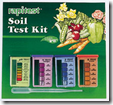
Why is pH So Important
You may be wondering about the importance of pH in your garden, or how it effects your plants.
You may also be unsure of how to monitor the pH, or what pH is best for your plants. Well, simply put, pH is a measurement of alkalinity or acidity in your soil. The scale ranges from 0 to 14. For vigorous growth, plants require nitrogen(N), phosphorus(P), and potassium(K). Incidentally, these are the numbers represented across the top of many fertilizers. The numbers are separated by a hyphen.
Moving along, these nutrients are readily available for absorption by plant roots when the pH is 6.0-7.0. An exception to
the rule is acid-loving plants, like azaleas and rhododendrons, which prefer pH of 5.5-6.0. Adding lime to the soil makes it more alkaline while adding sulfur makes soil more acidic. It's est to soil test through your local county extension office for the most accurate reading. That said, you can find a simple pH tester easily, which is most often quite accurate.
Tuesday, August 05, 2008
American Reel Mowers
100 Years of Building the Reel Tradition
In 1995 American Lawn Mower Company marked "100 years of building the reel tradition". To celebrate 100 years of manufacturing push reel lawn mowers, the company went on a search for the oldest person still using a reel. The search found Grace Rockwell, who was then ninety-five years old and from Mercersburg, PA.
The Push Reel Mower of Today
The mowers of today are essentially the same as were produced 100 years ago, but they are much easier to care for and much easier to use. The mower of yesteryear weighed from 40 to 60 pounds. Today's models range from 16 to 32 pounds. The wooden handles have been replaced with painted or plated tubular steel handles. The heavy cast wheels have been replaced with much lighter plastics in some models. Today's push reel mower has many advantages. They start every time. They don't need gas or spark plugs. They don't pollute the environment with fumes or noise. They are great exercise. They are the mower of choice for young and old alike.
A reel mower works on different principles than a standard rotary mower. It only cuts what gets between the reel and the cutter bar. Therefore, it is important to cut your lawn regularly and not allow the grass to reach a height of much over 3-4" in order to insure a proper cut. Mow no more than one-third of the grass blade, so that a deeper root system is encouraged. A lawn with an extensive network of roots needs less help finding food and water and can better crowd out weeds. If the lawn gets exceptionally tall, 4" or over, it may be necessary to increase the amount of overlap between passes, mow the same path once up and once back, or actually mow in a checkerboard pattern to obtain the desired results. Another symptom of grass that's too tall is a strip of uncut or taller grass towards the center of the reel even though your mower is set properly and you appear to be cutting grass along the entire width of the reel. This usually means you are attempting to cut too tall or too much grass in one pass for the reel to cut it properly. First increase the cutting height or, if already in the highest setting, increase the amount of overlap between passes. Ideal cutting performance is achieved at approximately 1-3/4" to 2-1/2" depending on the mower you choose.
No engine pays off with such low maintenance. -No gas, no oil, no spark plugs, no oily rags, no running to the gas station or hardware store to get supplies or parts. American Reel Mowers are simple, American made mowers. Brush them off occasionally, sprits the blades with WD-40, and sharpen them every other season.
Wednesday, July 16, 2008
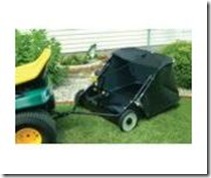
Lawn Sweepers
Today, you will find many choices, in lawn sweepers, many of which are very similar. It can be hard to tell the difference. It helps to know a little about a company, before buying their product.
One lawn sweeper manufacturer stands high above the rest, and that is Agri-Fab.
This is the story of Agri-Fab, Inc., a thriving company located in a small town in mid-America. A company that exists today solely because a few people had the faith to believe a miracle could happen.
It all began in 1936 with the creation of Community Industries and the goal to provide a community with steady employment during the Great Depression. In 1975, when an absentee employer closed the doors
of a lawn and garden business that had been an institution in Sullivan, Illinois, many individuals pooled their resources to build a new company. In doing so, they continued not only a community tradition, but also a family one.
The success of the manufacturing business launched in 1975 exceeded the founders’ wildest expectations. The story began with the idea of developing a new and improved lawn sweeper. Soon, Agri-Fab went on to redesign and manufacture a product that outperformed any lawn sweeper on the market. The result attracted the attention of a major retailer and, ultimately, catapulted Agri-Fab into the position of an industry leader of lawn and garden attachments.
In case you wonder why you should use a lawn sweeper, it is to give your lawn the cleanest, neatest mow possible. If you want a pristine cut, sweep first. Just like you would sweep the floor, before you mop. When shopping for a sweeper, consider the following features: path clearance, capacity, storage, wheels, extras, & warranty. Lawn sweepers quickly sweep up light litter, small twigs, grass, and leaves from your lawn, driveway and pathways.
Wednesday, May 21, 2008
Safe Lawn Care Products
Have you ever considered the effects of your lawn care products on your pets? According to a recent EPA study, dog owners who use herbicide containing 2,4,-D four times a season double their dog's chances of developing lymphoma.

There is a very simple solution to this. Look for natural solutions to your lawn care problems. There is a natural product for almost anything. The major difference is this: The natural products may take a little longer to be effective. You may have to reapply more often. Challenge yourself to break away from the supercharged chemicals and instant gratification. It is well worth it.
If lawn chemicals are known to have negative effects on your pets, what long term threat could they pose to your children, or yourself. Families are spending more time than ever in their back yard. Safety is definitely a priority.
Yardiac.com offers a wide selection of Organic Products, as do others. Take the time to do a little research. Learn about what is available, and how it works.
Here are just a few starter suggestions:
Hot Pepper Wax for insect control on vegetables and ornamentals
Burn Out for use in weed removal
All Natural Liquid Plant Food for safe and effective fertilizing
Wednesday, April 23, 2008
The Word on Grasscycling
What on Earth is Grasscycling, you ask? Simply put, it just means letting the grass clippings fall to the ground. There are several advantages to this practice. First of all, it helps to preserve soil moisture while returning valuable nutrients. According to some studies, grasscycling can provide 15 to 20 percent of a lawn's annual fertilizer requirement. -And it's free! What more can you ask for?
If you are worried about thatch, consider this. Thatch only becomes a problem when it is too thick. You can prevent this by healthy watering techniques. Water once a week or so, and long enough for the water to reach one inch below the surface. Roots will follow the water. Deeper roots will give you a healthier lawn, and will not encourage the roots to grow in the thatch, causing the thatch problem. In addition to better watering techniques, mow often. Long grass clippings will be more likely to smother the lawn.
98 percent of people who tried grasscycling said they will never bag again. Give it a try, and tell us your story!
Tuesday, March 25, 2008
Why Is My Lawn dying?
hen the snow is melting.
kes place at temperatures as low as freezing (to slightly below freezing) and continues after snow melt in the spring for as long as the grass remains wet and the temperatures cold. There are several things that you can do, to help prevent snow mold. Avoid late fall applications of fertilizer that would stimulate succulent growth. Such growth is very susceptible to
infection. Also continue to mow turf as long as it continues to grow in the fall, and avoid compacting snow over the lawn. Where snow molds have caused damage, rake the matted grass in order to encourage new spring growth. If re-seeding areas where these diseases have been a problem, use disease resistant turf grass varieties.
If snow molds have been severe or wide-spread in past years, or if you are growing a susceptible variety
, a preventative fungicide program may be used. Fungicide applications should be made in late autumn just before permanent snow cover is expected and, if possible, during a mid-winter thaw.
Friday, March 21, 2008
Control Summer Patch Before It Controls You
ches if conditions favor disease development. More often, large patches will appear suddenly with no indication of previous disease activity. In severe cases, the patches may coalesce and destroy large areas of turf. The patches initially take on a yellow color, then turn tan or a straw-brown color as the plants die.
aid in reducing disease severity. Increased aeration and improved drainage on compacted and poorly-drained soils will alleviate some root inhibition. Here are a few pointers:- Avoid light, frequent applications of water.
- Avoid heavy nitrogen fertility, especially in the spring.
- Use slow release sources of nitrogen fertilizer.
- Reduce thatch when the layer is over ½ inches thick.
- Core aerate compacted soils in the fall, and if necessary, repeat core aeration in the spring.
Wednesday, March 05, 2008
Learn More About Reel Mowing
designed for the homeowner that is making the transition from the traditional motor powered mower, to the reel mower.
The reel mower is perfect for small landscapes, such as those found accompanying condos and in subdivisions.
Reel mowers were first introduced in 1870, but the ones being used today, are definitely not the same mower. You will find that today's mowers cut much more freely. They use a non contact mowing
technique. It gives your lawn a scissor cut, instead of a sawed edge. This holds in the moisture, and keeps the ends from looking brown. It gives a much more manicured look, and doesn't shock the turf.
thern turf varieties have been proven over 200 years of worldwide use. Most current mowing height recommendations are based on the requirements of power rotary mowers, which cannot mow at attractive healthy lower heights without possible damage to the lawn such as browning and scalping injury. Regularity, mowing, watering and feeding will encourage your lawn to better health and appearance!
You may be wondering about the grass catcher. The push reel mower is the original mulching mower. In most areas grass cycling, or leaving the clippings on the lawn, provides the la
wn with a quarter to a third of its nutritional season long. Generally a grass catcher is not needed unless you wish to collect the clippings for use as mulch elsewhere. (See our composting articles.) Use of the grass catcher is more common in the South, where Bermuda and St. Augustine lawns in their high growth periods require mowing twice a week. That much mowing generates a lot of clippings so the grass catcher can be useful to avoid an excessive buildup of clippings on the lawn. This can create a thick thatch, which can rob the roots of essential oxygen, and water. If you find that you have too much thatch, you may want to read about aeration. Oxygen is essential to root hea
lth, for any plant, including turf.
Another factor to consider in a mower is maintenance. You will only need to keep your reel mower dry, and oiled. The cleaner you keep it the longer it lasts. Spraying the blades with silicon lube spray is also a good step to make the blades easier to clean and to prevent rust. On a superior quality mower, you should only have to sharpen the blades once every 7-10 years. Reel mowers are safer, and require far less maintenance than their motorized counterparts.
While reel mowers are not for everyone, they certainly are making a comeback. We would love for you to share your thoughts, experiences, and questions.
Tuesday, February 05, 2008
Grubs
Grubs that you see in the lawn are the larvae of Japanese beetles, June beetles, and chaf
ers. These grubs are C-shaped, off-white in color with a dark head. They eat the roots of grass, causing irregularly shaped patches of wilted, dead, or dying grass in April and May, and again in August to mid-October, with a serious infestation, the turf can be lifted up from the soil and rolled back like a carpet. If the damage to the grass is not too severe, the grass will recover with normal watering and fertilizing. Lawns that are heavily damaged by grubs will have a yellowi
sh tinge and will feel spongy when walked on.
In small populations, grubs do not represent a problem to a healthy lawn. It is normal for all lawns to have some grubs present. Four to six grubs per square foot of turf probably won't cause any visible damage in a healthy lawn. However, when a lawn begins to have more than six grubs per square foot of lawn, this would be considered a grub problem. To check the size of a grub population in your lawn, dig out a square foot of grass and turn it over to examine the roots.
Count the visible grubs. If you have more than six visible grubs, you should consider applying a grub control product. Ten or more grubs per square foot will likely cause damage, especially if the lawn is otherwise stressed.
If animals such as skunks, raccoons, birds, and moles are digging up the turf to feed on the grubs, consider treating your lawn. The grubs can be stressful enough on your lawn. Digging animals can reak havok. It will be almost impossible to get rid of the animals, with an abundant supply of grubs, especially if they have little ones to feed.
Monday, October 15, 2007
Fungi
is characterized by small black dots, with a border on both sides of the leaves. Fungi will cause leaves to yellow and die. You will need to remove all infected leaves. Neem Oil, mostly used in a concentrate, is best. Other treatments are mancozeb, and captan.
Brown Patch develops in hot, humid weather as irregular rings or circular brown spots. Leaves and roots are rotting inside the ring. Treatments include Mancozeb, Bayer Fungus Control for Lawns, etc.
Early and Late Blight can both be treated with N
eem Oil. Early Blight is known for brown to black spots on leaves, concentric rings. Late Blight's symptoms are a little different. Leaves will have blotches of dark green to black-purple and soon turn brown and die. A white mold appears on the leaf's undersides in cool, damp weather. Tomatoes are dark green, brown, or black and appear wrinkled or greasy. Potato tubers have brown spots and dry, reddish-brown stains; a reddish-brown stain appears in the flesh. Mancozeb will treat both of these.
Powdery Mildew symptoms include superficial white coatings that are powdery to mealy appear on leaves, buds, shoots, flowers and fruit. Powdery mildew fungi infect during warm, dry days and cool, damp nights wherever air circulation is poor. Remedy is best, for expulsion of Powdry Mildew.
Rust is known to be yellow, orange, or brown powdery masses that develop on leaves and stems and sometimes on the flowers and fruit. Leaves wither and fall early. The fungi are active in damp weather. You can treat it with Neem Oil.
Most all of the fungi mentioned above can be prevented by taking a few cautious steps, when planting. Keep foliage dry. In other words, locate your garden where it will receive morning sun. Allow extra room between the plants, and avoid overhead watering, especially late in the day. Purchase certified disease-free seeds and plants. Remove any diseased leaves, or shoots. Do not prune with infected tools.
Please share your ideas, with everyone. Every Gardener has a story, or suggestion, I am sure!!
Monday, October 08, 2007
Bahia Grass
Everyone is familiar with the Compact Fluorescent light bulbs, but have you ever considered switching grasses?
Bahia grass is a warm grass and is typically found across the Southeast, and in Southern California. It is known for it's drought resistance, and low maintenance. It's a great seed starter. Bahia grass is a perennial grass that lasts indefinitely. Another popular feature is high disease and insect resistance. In addition, it survives in a variety of soils, from sandy to clay. Bahia grass is very resilient, to close grazing and traffic wear. It will grow thick enough to compete with weeds, and respond well to nitrogen applications, creating the coveted green lawn.
Disadvantages include yellowing in the Spring, and Fall. However, this is easily overcome with a product like Ironite. Another thing to watch out for is an open growth habit over time, or thinning spaces. You can control this with good lawn aeration. There are several way to do
this. You can use a machine that you pull, or push, or you can just use aeration shoes, as you mow. One other obstacle that you may encounter is weed control. Just like most other Southern grasses, it is not tolerant of weed control products. It is in the weed family, itself. You will need to mow, and fertilize the grass, and be careful of over watering, to avoid having an infestation of undesirable growth, just like St.Augustine, or other Southern varieties. If you do have a problem, you will want to spot treat. Bahia grass can have a coarse texture, and is not suitable for high PH soils.
There are three varieties. Argentine is preferred by homeowners in Florida. Pensacola is noted for it's resilience in the transitional regions; And, Tifton 9 is enjoyed by cows, and horses across the Southeast. It's perfect for a pasture.
Bahia grass should be mowed at three to four inches, at intervals of seven to seventeen days. You will find that a rotary mower works best.
Be sure to post your suggestions, and experiences, good or bad, with Bahia grass. Let's all learn from each other!
Thursday, September 13, 2007
Defend Your Lawn the Smart & Safe Way
lawn that you worked so hard to promote!
The market is flooded with devices, sprays, granuals, etc, making it hard to make a decision that you are confident about! One of the best deterrents is the Scarecrow Motion Activated Sprinkler. It has been on the market for years. They are safe, and effective. All you need is a water connection, and a nine volt battery. You can even link two, or more, together, for a wider area of protection. Each Scarecrow covers about 1200 square feet. It only uses about two or three cups of water at a time, and it is effective day, and night.
The Scarecrow will be effective on almost anything! -Deer, racoons, heron, dogs and more. As they approach, it repels them with a short but startling burst of water. The sudden noise, movement and spray scares animals away, teaching them to avoid the area in future. Animals tend to be creatures of habit. Once you break their habbit of entering, or grazing, in your lawn, you have made a great stride towards eradicating the problem, alltogether.
Another popular use of the Scarecrow is around your pond, to protect your fish! Heron, and cats, are notorious offenders. It dosn't have to be in plain view, if you are concerned about the looks of it. Don't be afraid to get creative. Just stake the scarecrow in the middle of a full shrub, or decorative grass. So long as the sensor, or head, of the unit is exposed, it will be fully effective.
Share your story, with us! What is your most effective tip, for defending your yard?
Thursday, August 02, 2007
Say Goodbye to Moles and Voles Forever!
Tuesday, February 20, 2007
Understanding Pre-Emergent Herbicides
Thursday, January 25, 2007
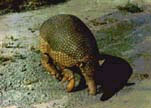
Controlling Armadillos
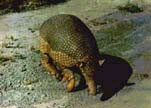
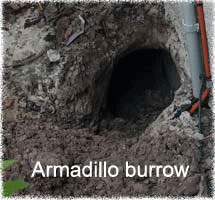
Armadillos belong to the same family of mammals as the sloth and anteaters. Their body is made of a leathery material generally referred to as "armor". The species most present in North America is the Nine-banded armadillo and can be found throughout the entire southwest and southeast. In fact, this species of armadillo is migrating ever further from Texas - the original state it was first found. In some states, they have established themselves after being released intentionally. Armadillos love to nest in rock piles, around trees or shrubs and under slabs. Their burrows are usually 15 to 25 feet long and cause extreme damage to tree roots. In many cases, this damage leads to the tree dying. These same burrows can lead to flooding when dug around crawl spaces and can undermine patio slabs or walkways. This weakening ultimately leads to the concrete falling apart and breaking.
Armadillos are strong diggers and rely on this strength for food and shelter. They are attracted to tasty fruit which may be found in a garden or compost pile. Once they start coming around, expect them to return every night as they are mostly nocturnal. They like to establish "runs" where they will travel every night expecting to find food. These same "runs" can be used against them and will be discussed later in the article. Armadillos also love turf worms and grubs. Lawns which are left untended will often develop beetle grub populations which will certainly attract armadillos from far and wide. Earthworms are another food source they like and either grubs or worms can be found by digging up sod, raking away leaves, moving carefully laid wood chips or bark, or simply digging frantically until such food is found. Either way, the mess they leave is aggravating, damaging and never ending once it begins.Armadillos mate in the fall and have their young around February or March. Almost every litter will have identical
quadruplets. These miniature adults are ready to walk, swim and behave much like their parents. By the end of the summer, they, too, will be wreaking havoc in the neighborhood! Armadillo control can be accomplished by either a passive, or aggressive, method. Using both tactics will ultimately provide the best results. Passive techniques use repellents and sprays to deal with the armadillos vast food sources. This approach will provide results. Aggressive techniques involve trapping and provide instant control. However, if some of the passive techniques are not employed, other armadillos will move into the vacant territory once the current armadillo is removed. In most cases, both passive and aggressive armadillo control will yield the best results.