 Propagating Plants: Making More of What You Already Have affection
Gardening has got to be the greatest hobby in the entire world. There is no other pastime where you can take the object of your affection and admiration, the very thing that makes your hobby possible, the plant, and increase its numbers as you see fit at little or no additional charge! If you plant a golf ball, no matter how hard you try, it will never grow another golf ball. If you cut off a piece of a golf club, it will never regenerate into a whole golf club. You cannot divide a golf club and expect that it will ever be a functional golf club again. The same holds true for all of the necessary equipment for most other hobbies. To be able to make one plant into many plants is one of the most enjoyable parts of being a gardener, not to mention one of the most cost effective. Propagating successfully will also make you very popular among your gardening friends! There are basically two types of propagation. Asexual propagation refers to multiplying the number of plants by using parts of the plant such as leaves, stems, and roots to regenerate into a new plant. Sexual propagation is the union of pollen (male) and egg (female) to produce a seed.
Over the next Seven Days we will discuss the various ways you can "fool around" with Plant Propagation - so check back each day.
Propagating Plants: Making More of What You Already Have affection
Gardening has got to be the greatest hobby in the entire world. There is no other pastime where you can take the object of your affection and admiration, the very thing that makes your hobby possible, the plant, and increase its numbers as you see fit at little or no additional charge! If you plant a golf ball, no matter how hard you try, it will never grow another golf ball. If you cut off a piece of a golf club, it will never regenerate into a whole golf club. You cannot divide a golf club and expect that it will ever be a functional golf club again. The same holds true for all of the necessary equipment for most other hobbies. To be able to make one plant into many plants is one of the most enjoyable parts of being a gardener, not to mention one of the most cost effective. Propagating successfully will also make you very popular among your gardening friends! There are basically two types of propagation. Asexual propagation refers to multiplying the number of plants by using parts of the plant such as leaves, stems, and roots to regenerate into a new plant. Sexual propagation is the union of pollen (male) and egg (female) to produce a seed.
Over the next Seven Days we will discuss the various ways you can "fool around" with Plant Propagation - so check back each day.
Showing posts with label Gardening Techniques. Show all posts
Showing posts with label Gardening Techniques. Show all posts
Saturday, February 13, 2010
Propagating Plants 101
Propagating Plants: Making More of What You Already Have affection
Gardening has got to be the greatest hobby in the entire world. There is no other pastime where you can take the object of your affection and admiration, the very thing that makes your hobby possible, the plant, and increase its numbers as you see fit at little or no additional charge! If you plant a golf ball, no matter how hard you try, it will never grow another golf ball. If you cut off a piece of a golf club, it will never regenerate into a whole golf club. You cannot divide a golf club and expect that it will ever be a functional golf club again. The same holds true for all of the necessary equipment for most other hobbies. To be able to make one plant into many plants is one of the most enjoyable parts of being a gardener, not to mention one of the most cost effective. Propagating successfully will also make you very popular among your gardening friends! There are basically two types of propagation. Asexual propagation refers to multiplying the number of plants by using parts of the plant such as leaves, stems, and roots to regenerate into a new plant. Sexual propagation is the union of pollen (male) and egg (female) to produce a seed.
Over the next Seven Days we will discuss the various ways you can "fool around" with Plant Propagation - so check back each day.


Saturday, November 07, 2009
Tidy Potting Mesh Sieve
 This is a surefire tool for sifting finished compost from larger, unfinshed matter. It can help you 'clean' good soil from debris, coarse materials,clumps, rocks, dead roots, weeds, stones and leaves. It can also help to spread compost, fertilizer, potting soil, and other soil amendments evenly on your garden or lawn.
This fine mesh plastic sieve featuring integral tough steel diamond mesh. Ideal for sifting compost to give the ideal base for successful seed or cutting raising. Mesh holes are 9mm wide by 5mm high.
This is a surefire tool for sifting finished compost from larger, unfinshed matter. It can help you 'clean' good soil from debris, coarse materials,clumps, rocks, dead roots, weeds, stones and leaves. It can also help to spread compost, fertilizer, potting soil, and other soil amendments evenly on your garden or lawn.
This fine mesh plastic sieve featuring integral tough steel diamond mesh. Ideal for sifting compost to give the ideal base for successful seed or cutting raising. Mesh holes are 9mm wide by 5mm high.
Friday, July 17, 2009
Are We Runing Out of Water?
 At least 39 states expect water shortfalls by 2013. How will this affect you and your home? All over the US, families, farms, cities and states are working to manage water usage. Drought-prone areas are looking to seawater -- and even wastewater -- as solutions.
According to the USDA 71% of all the water drawn in the world is used for agriculture and growing. Rain barrels are great way for you to do your part in water conservation.
At least 39 states expect water shortfalls by 2013. How will this affect you and your home? All over the US, families, farms, cities and states are working to manage water usage. Drought-prone areas are looking to seawater -- and even wastewater -- as solutions.
According to the USDA 71% of all the water drawn in the world is used for agriculture and growing. Rain barrels are great way for you to do your part in water conservation.
Wednesday, July 15, 2009
Gardening 101 - Soil Testing
This subject may seem very rudimentary- however we get so many questions about soil conditions and even more gardening problems that could have been avoided with a simple soil test.
So here we go - Why should you test your soil?
Plants need food (nutrients)for health growth. Nitrogen, Phosphorus and Potash (N, P and K for short), play a vital role in plant growth just as vitamins, minerals, carbohydrates and protein do in our health.
 N Nitrogen is synonymous with plant nutrition. It is directly responsible for producing leaf growth and green leaves. A deficiency causes yellow leaves and stunted growth. Too much nitrogen causes over-abundant foliage with delayed flowering; the plant becomes subject to disease and its fruit is of poor quality.
P Growing plants need phosphorous. It is the major constituent of plant genetics and seed development. A deficiency causes stunted growth and seed sterility. Phosphorous aids plant maturity, increases the seed yield, increases fruit development, increases vitamin content and aids the plant's resistance to disease and winterkill.
K Potash strengthens the plant. It helps form carbohydrates and promotes protein synthesis. It will improve the color and flavor of fruit. It further aids early growth, stem strength and cold hardiness. Plants deficient in potash are usually stunted and have poorly developed root systems. Leaves are spotted, curled and appear dried out at the edges. Yields for potash deficiency are low.
pH Plants also need to correct pH (acidity / alkalinity) level, which controls how well plants utilize the nutrients available in your soil. All plants have a pH preference, so it is important to know the pH level of your soil. You can then choose plants with the same pH preference, avoid those that will not do well in your soil or know how to go about supplying their special growing needs. By testing your soil, you determine its exact condition so that you can fertilize and/or adjust pH more accurately, effectively, and economically.
N Nitrogen is synonymous with plant nutrition. It is directly responsible for producing leaf growth and green leaves. A deficiency causes yellow leaves and stunted growth. Too much nitrogen causes over-abundant foliage with delayed flowering; the plant becomes subject to disease and its fruit is of poor quality.
P Growing plants need phosphorous. It is the major constituent of plant genetics and seed development. A deficiency causes stunted growth and seed sterility. Phosphorous aids plant maturity, increases the seed yield, increases fruit development, increases vitamin content and aids the plant's resistance to disease and winterkill.
K Potash strengthens the plant. It helps form carbohydrates and promotes protein synthesis. It will improve the color and flavor of fruit. It further aids early growth, stem strength and cold hardiness. Plants deficient in potash are usually stunted and have poorly developed root systems. Leaves are spotted, curled and appear dried out at the edges. Yields for potash deficiency are low.
pH Plants also need to correct pH (acidity / alkalinity) level, which controls how well plants utilize the nutrients available in your soil. All plants have a pH preference, so it is important to know the pH level of your soil. You can then choose plants with the same pH preference, avoid those that will not do well in your soil or know how to go about supplying their special growing needs. By testing your soil, you determine its exact condition so that you can fertilize and/or adjust pH more accurately, effectively, and economically.
N Nitrogen is synonymous with plant nutrition. It is directly responsible for producing leaf growth and green leaves. A deficiency causes yellow leaves and stunted growth. Too much nitrogen causes over-abundant foliage with delayed flowering; the plant becomes subject to disease and its fruit is of poor quality.
P Growing plants need phosphorous. It is the major constituent of plant genetics and seed development. A deficiency causes stunted growth and seed sterility. Phosphorous aids plant maturity, increases the seed yield, increases fruit development, increases vitamin content and aids the plant's resistance to disease and winterkill.
K Potash strengthens the plant. It helps form carbohydrates and promotes protein synthesis. It will improve the color and flavor of fruit. It further aids early growth, stem strength and cold hardiness. Plants deficient in potash are usually stunted and have poorly developed root systems. Leaves are spotted, curled and appear dried out at the edges. Yields for potash deficiency are low.
pH Plants also need to correct pH (acidity / alkalinity) level, which controls how well plants utilize the nutrients available in your soil. All plants have a pH preference, so it is important to know the pH level of your soil. You can then choose plants with the same pH preference, avoid those that will not do well in your soil or know how to go about supplying their special growing needs. By testing your soil, you determine its exact condition so that you can fertilize and/or adjust pH more accurately, effectively, and economically.
Tuesday, June 23, 2009
 This Product Makes Plants Happy!
At my house we always have a two week "Sun Light" debate prior to the selection of plants for a new location. My wife always insists the new location has too much or too little sun. While we waste time analyzing "how much sunlight" the new site actually receives each day we loose valuable growing time. Recently we came across a product called the SunStick. The SunStick measures the amount of sunlight a given area receives in one day. Simply attach a Sunshine Meter to a Stem, plant it in the ground in the morning and return at the end of the day.
Simply place in your Garden and Get Results- The Sunstick Measures sunlight in your garden
- Sunlight color chart included
- Can be used as a plant identifier
- Accurate during the growing season

Monday, May 18, 2009
Raised Garden Beds
Many people ask, what is raised bed gardening? In simplest terms it is when you build a garden that has a frame, and fill the frame with soil so it is above the surrounding territory. Raised bed gardening can be a great assistance to those gardeners who are plagued with poor drainage of their yard. By creating a raised bed, the garden will no longer be overly wet, and thus less susceptible to disease and decay. Additionally a raised bed garden will allow easier access to the plants and vegetables, as you won’t have to bend over, and down as far, as a traditional garden. The soil in a raised bed garden will warm up quicker, than a normal garden, thus allowing you plant certain vegetables in your garden slightly earlier than normal.
 When choosing a location for your Raised bed gardening raised bed vegetable garden make sure you choose the sunniest place in your yard. Once you have gone through all the work of setting up your garden, you don’t want to have to move it to a new location later. Generally you should try to have the rows of your vegetable garden run from north to south. The tallest crops should be planted on the north side of the garden, so they don’t cast a shadow over the rest of your garden. The smaller crops such as lettuce and carrots can be planted on the southern side, as they won’t cast much of a shadow over the rest of the garden.
 There are many raised bed garden kits that are available on the market today. Many of these kits are made of cedar, which will resist decomposition. However you can build a raised bed garden out of any material that you choose, such as bricks, concrete, rocks, or wood. If you choose to buy a raised bed garden kit, generally there are multiple layouts that you can choose from. If you are using your own material, you can make a concentric garden, or create any shape of your liking. One of the goals of raised bed gardening is to avoid soil compaction. Make sure you keep that in mind when you are planning your raised bed garden.
Once you have built the frame of your garden you must fill the garden with the proper soil. If the soil in your area is decent you can use this as a base for your raised bed garden. Additionally you should add sand, compost, peat moss, peat humus, and manure. This will allow for the ideal conditions for your garden. Make sure you check the pH of the mixture you have just made as you don’t want it to be too alkaline or acidic. Every year you should till your garden, and top dress it with fresh compost and manure.
Raised bed gardening is much easier than you think, and there is no reason anyone can’t get started with a raised bed garden today. You can even start with a small garden now, and increase it’s size in the future, as you get more experienced, and professional.
There are many raised bed garden kits that are available on the market today. Many of these kits are made of cedar, which will resist decomposition. However you can build a raised bed garden out of any material that you choose, such as bricks, concrete, rocks, or wood. If you choose to buy a raised bed garden kit, generally there are multiple layouts that you can choose from. If you are using your own material, you can make a concentric garden, or create any shape of your liking. One of the goals of raised bed gardening is to avoid soil compaction. Make sure you keep that in mind when you are planning your raised bed garden.
Once you have built the frame of your garden you must fill the garden with the proper soil. If the soil in your area is decent you can use this as a base for your raised bed garden. Additionally you should add sand, compost, peat moss, peat humus, and manure. This will allow for the ideal conditions for your garden. Make sure you check the pH of the mixture you have just made as you don’t want it to be too alkaline or acidic. Every year you should till your garden, and top dress it with fresh compost and manure.
Raised bed gardening is much easier than you think, and there is no reason anyone can’t get started with a raised bed garden today. You can even start with a small garden now, and increase it’s size in the future, as you get more experienced, and professional.
When choosing a location for your Raised bed gardening raised bed vegetable garden make sure you choose the sunniest place in your yard. Once you have gone through all the work of setting up your garden, you don’t want to have to move it to a new location later. Generally you should try to have the rows of your vegetable garden run from north to south. The tallest crops should be planted on the north side of the garden, so they don’t cast a shadow over the rest of your garden. The smaller crops such as lettuce and carrots can be planted on the southern side, as they won’t cast much of a shadow over the rest of the garden.
There are many raised bed garden kits that are available on the market today. Many of these kits are made of cedar, which will resist decomposition. However you can build a raised bed garden out of any material that you choose, such as bricks, concrete, rocks, or wood. If you choose to buy a raised bed garden kit, generally there are multiple layouts that you can choose from. If you are using your own material, you can make a concentric garden, or create any shape of your liking. One of the goals of raised bed gardening is to avoid soil compaction. Make sure you keep that in mind when you are planning your raised bed garden.
Once you have built the frame of your garden you must fill the garden with the proper soil. If the soil in your area is decent you can use this as a base for your raised bed garden. Additionally you should add sand, compost, peat moss, peat humus, and manure. This will allow for the ideal conditions for your garden. Make sure you check the pH of the mixture you have just made as you don’t want it to be too alkaline or acidic. Every year you should till your garden, and top dress it with fresh compost and manure.
Raised bed gardening is much easier than you think, and there is no reason anyone can’t get started with a raised bed garden today. You can even start with a small garden now, and increase it’s size in the future, as you get more experienced, and professional.
Saturday, May 02, 2009
Mist and Water Your Plants With One Tool
 Here is a nifty new tool! The Mist n' Pour is a spray bottle with a spout, so you can water and mist your plants at the same time -- without additional equipment. That's good news for you and your plants. But what's even better is the one-of-kind, battery powered sprayer-head.
The battery powered trigger allows you do power spray effortlessly. You'll never end up with an aching index finger, even after misting all your ferns and fuchsias. Best of all, you can mist all your plants in less time, because the oversized trigger creates a powerful spray action that either spray or stream.
The bottle's ergonomic design provides an easy, natural hold for extra comfort and control, especially helpful for weak or older hands. A wide platform base keeps the sprayer steady and resists tipping, while a custom-contoured handle makes carrying and filling easy.
The Mist n' Pour'slarge capacity container will hold 2 liters and features both metric and ounce calibrations -- allowing plant foods, pesticides and herbicides to be measured and mixed right inside the bottle.
Friday, April 17, 2009
The Best Time to Plant a Vegetable Garden
Click to review the Yardiac.com Organic Vegetable Fertilizers Most Yardiacs can't wait to start planting, so they can enjoy the taste of fresh vegetables. However, these plants actually have recommended planting times. The last spring frost is important to gardeners, in order to plan when to set out frost-sensitive annuals, vegetables, and even tropical container plants.
Some vegetables are frost tolerant, and can be planted as soon as the ground can be worked. Others are slightly less hardy and should be placed in the ground 2-4 weeks before the average last frost date, which is a specified date calculated for an area after which frost is unlikely to occur. Frost sensitive plants, such as melons, peppers, and tomatoes, should be planted after the last frost. Check with the extension service in your area for this information.
Unfortunately, cold weather may still occur after the crop has been planted, and some kinds of protection will be needed to shelter sensitive plants. To retain heat, cover frost sensitive plants just before sundown using nonmetallic containers, or old lightweight blankets, or row covers. Container plants are easy to deal with. Just move them to a garage or other protected areas.
Yardiac has a great selection of greenhouses, as well!
Most Yardiacs can't wait to start planting, so they can enjoy the taste of fresh vegetables. However, these plants actually have recommended planting times. The last spring frost is important to gardeners, in order to plan when to set out frost-sensitive annuals, vegetables, and even tropical container plants.
Some vegetables are frost tolerant, and can be planted as soon as the ground can be worked. Others are slightly less hardy and should be placed in the ground 2-4 weeks before the average last frost date, which is a specified date calculated for an area after which frost is unlikely to occur. Frost sensitive plants, such as melons, peppers, and tomatoes, should be planted after the last frost. Check with the extension service in your area for this information.
Unfortunately, cold weather may still occur after the crop has been planted, and some kinds of protection will be needed to shelter sensitive plants. To retain heat, cover frost sensitive plants just before sundown using nonmetallic containers, or old lightweight blankets, or row covers. Container plants are easy to deal with. Just move them to a garage or other protected areas.
Yardiac has a great selection of greenhouses, as well!
Most Yardiacs can't wait to start planting, so they can enjoy the taste of fresh vegetables. However, these plants actually have recommended planting times. The last spring frost is important to gardeners, in order to plan when to set out frost-sensitive annuals, vegetables, and even tropical container plants.
Some vegetables are frost tolerant, and can be planted as soon as the ground can be worked. Others are slightly less hardy and should be placed in the ground 2-4 weeks before the average last frost date, which is a specified date calculated for an area after which frost is unlikely to occur. Frost sensitive plants, such as melons, peppers, and tomatoes, should be planted after the last frost. Check with the extension service in your area for this information.
Unfortunately, cold weather may still occur after the crop has been planted, and some kinds of protection will be needed to shelter sensitive plants. To retain heat, cover frost sensitive plants just before sundown using nonmetallic containers, or old lightweight blankets, or row covers. Container plants are easy to deal with. Just move them to a garage or other protected areas.
Yardiac has a great selection of greenhouses, as well!
- Very Cold Tolerant Plants -- Plant as soon as ground can be worked, somewhat.
- Cold Tolerant Plants -- Plant 2-4 weeks before the first average frost free date.
- Frost sensitive Plants -- Plant after the last frost.
Very cold tolerant plants include asparagus, horseradish, leeks, onions, parsnips, peas, spinich, turnips, and shallots. Somewhat cold tolerant plants include beets, broccoli, cabbage, kohlrabi, carrots, cauliflower, celery, collards, lettuce, kale, endive, and onion sets. Frost sensitive plants include melons, peppers, tomatoes, sweet corn, eggplant, cucumbers, artichoke, and squash.
To view a detailed temperature map, visit us at Yardiac.com.Monday, April 06, 2009
Give Your Compost Pile a Jump Start
 There are several ways to activate a new compost pile. Some of the most effective products contain billions of beneficial microorganisms to aid in the breakdown of organic material. These bacteria are kept in a dormant state, usually in a kelp or bran medium, until applied to the compost pile and watered. Using a bio-activator product is the surest way to get your compost pile off to a quick start.
Turns grass clippings, leaves and waste into healthy soil-enriching humus. University-tested BioActivator contains billions of hard-working beneficial organisms to break down and recycle the toughest organic waste quickly. Just sprinkle onto compost raw materials and follow label directions.
Highly Active Micro-Organisms
There are several ways to activate a new compost pile. Some of the most effective products contain billions of beneficial microorganisms to aid in the breakdown of organic material. These bacteria are kept in a dormant state, usually in a kelp or bran medium, until applied to the compost pile and watered. Using a bio-activator product is the surest way to get your compost pile off to a quick start.
Turns grass clippings, leaves and waste into healthy soil-enriching humus. University-tested BioActivator contains billions of hard-working beneficial organisms to break down and recycle the toughest organic waste quickly. Just sprinkle onto compost raw materials and follow label directions.
Highly Active Micro-Organisms
 A specially formulated blend of highly active micro-organisms, nutrients, and special enzyme systems that will synergistically accelerate the natural compost degradation cycle.
One pound can usually treat up to one ton of compost. So just a sprinkle into your composter should get you started. Good Luck Yardiac's! If you have any questions please feel free to contact us anytime
Visit our Garden Center !
A specially formulated blend of highly active micro-organisms, nutrients, and special enzyme systems that will synergistically accelerate the natural compost degradation cycle.
One pound can usually treat up to one ton of compost. So just a sprinkle into your composter should get you started. Good Luck Yardiac's! If you have any questions please feel free to contact us anytime
Visit our Garden Center !
Tuesday, March 24, 2009
Been There - Killed That
I have determined a plant is not garden-worthy in my landscape unless I have 
But many times I have killed things out of ignorance. For example, shortly after moving into my first home, our tiny lawn was covered with dandelions. So as any budding Yardiac would do, I ran to the nearest store and purchased the first weed killer I saw. I sprayed the entire lawn in about 60 seconds and thought I had successfully removed all weeds from my lawn. (little did I know)

I awoke the next day expecting to find decaying weeds only to find my entire lawn burned out. I ran to the shed to read the label only to discover I had applied "Round Up" and needless to say killed everything. This was a valuable lesson that help formulate my future gardening habits.
After much effort, I was able to remove the dead grass and establish thick green turf only to find it infested with even more weeds the following Spring. This time I was determined not make the same mistake and studied every inch of the yard. Anything not resembling the picture of perfection was quickly removed and transported to the local extension service for further examination.

This website displays images of the most common weeds and prescribes the right medication to selectively kill the weeds without damaging your turf. You can never fully enjoy the successes without a little bit of gardening failure - and you never know what might success may develop through failure - so have fun this Spring!
Monday, March 23, 2009
Michelle Obama's White House Vegetable Garden
Finally we have a "Yardiac" in the White House!

Shortly after Obama was elected last November, chef and locally-grown food cheerleader Alice Waters volunteered herself as an advisor on food policy, a member of the president’s “kitchen cabinet.” “I cannot forget the vision I have had since 1993 of a beautiful vegetable garden on the White House lawn,” she wrote in a letter to the Obamas. “It would demonstrate to the nation and to the world our priority of stewardship of the land--a true victory garden!” And hers wasn’t the only call to action. Told of plans for the new organic vegetable garden, Waters said, “Nothing could be more exciting.”
Send us pictures of your garden and perhaps we will do a future story on your gardening techniques
Wednesday, March 18, 2009
Natural Fertilizers vs Organic Fertilizers

There is a major difference between products labeled as "Natural Fertilizers" as opposed to truly "Organic" fertilizers. Natural Fertilizers are NOT the same as Organic. "Natural Fertilizers" are made from natural synthetics that include non-organic elements that are manufactured in order to increase the N-P-K. From a marketing standpoint, some manufacturers strive to make their N-P-K numbers look bigger than their competitors' numbers. This is often confusing to consumers trying to compare both products sitting side by side on the shelf in the garden center.

Another thing to be mindful of is price. At first glance most organic fertilizers appear to be more expensive than natural fertilizers and chemical fertilizers. Upon further inspection you will discover that a little bit of organic product goes a long way!Organic Fertilizers feed slower and last longer so you will require fewer applications and build a stronger foundation.
Furthermore organics deliver an even-balanced and nutritional feed while replacing the organic micro organisms instantly back into the soil. Natural/Chemical fertilizers only feed for 10 to 14 days on average, while sterilizing and robbing the soil of all the natural trace elements and micro organisms. Click Here to view the Organic Fertilizers recommended by Yardiac.
Thursday, March 12, 2009
Spring Grape Hyacinth AKA Lent Flowers

Looking for somthing that becomes misted blue every April? We suggest considering grape hyacinth. Muscari, it's genus name derived from the Greek word for musk, alludes to the delicious fragrance, it originated mostly in Italy, Greece, North Africa, Turkey, Armenia, and the Caucasus.
The flowers of this genus typically cluster like grapes on the stalk, hence the common name grape hyacinth. Some say the folksy name “starch lilies” relates to their aroma, but elsewhere I’ve read that the mucilaginous bulbs were actually once used for stiffening linen. In ecclesiastical gardens they’re sometimes labeled as “lent flowers” or “church steeples.”
These bulbs like full sun and sandy soil. Frost resistant , attractive to bees, easy to care for and add true blue beauty. Work well in Zones 4 to 8 and are virtually pest-proof. For the best results, plant grape hyacinths 3 to 4 inches apart and 2 to 3 inches deep. Most varieties that have been in the ground at least a year will send up leaves in the fall that last through winter until the flower blooms. To propagate by division, lift, split, and replant the bulb clusters in late summer when the plants are dormant.
Monday, March 02, 2009
Understanding Plant Nutrition
Eighteen elements are considered essential for plant growth. Carbon, hydrogen, and oxygen are primarily supplied by air and water. Plant roots absorb the remaining 15 elements from the surrounding soil. These elements are divided into three groups based on their relative abundance in plants: Primary Nutrients (or Major Nutrients), Secondary Nutrients (or Minor Nutrients), and Trace Nutrients (or Micronutrients). Although the Major Nutrients are needed in the greatest quantities, a deficiency of any one nutrient can prevent plant growth, or reduce it to unsatisfactory levels. Even though some soils may already contain these nutrients, they may not be in a form available for plant growth. The best way to ensure that all of the nutrients are available in the soil is through regular applications of plant foods. Table 1 provides more information on each nutrient, its deficiency symptoms, and possible plant foods to cure the deficiency.
| PrimaryNutrients | Function | Deficiency Symptoms | *Solutions |
Nitrogen | Vigorous growth & dark greencolor | Light green leaves; stuntedgrowth | Dried Blood, Garden Manure, Cottonseed Meal,Ammonium Sulfate, Urea |
Phosphorus | Root development &flowering | Smaller yields of seeds & fruit; purplishleaves, stems & branches; | Rock Phosphate, Bone Meal, SingleSuperphosphate, Triple Superphosphate |
Potassium | Overall hardiness & diseaseresistance | Reduced yields; Spotted or curled leaves;Weak root system | Sulfate of Potash, Sulfate of PotashMagnesia, Muriate of Potash, Greensand |
| SecondaryNutrients | Function | DeficiencySymptoms | *Solutions |
Calcium | Plant vigor; Aids in uptake of nutrients | Deformed terminal leaves; Poor root growth | Garden Lime, Garden Gypsum |
Magnesium | Essential part of chlorophyll | Yellowing of older leaves | Garden Lime, Sulfate of Potash Magnesia |
Sulfur | Dark green color; Seed production | Yellow leaves; Stunted, spindly plants | Garden Sulfur, Sulfate of Potash, Gypsum |
| TraceNutrients | Function | DeficiencySymptoms | *Solutions |
Boron | Increases flowering & fruit development | Terminal buds die; Less flowers & fruit develop | Garden Manure, Bone Meal |
Chlorine | Helps control water loss & moisture stress | Plants wilt; yellow leaves | Muriate of Potash, Garden Manure, Greensand |
Cobalt | Improves growth & transpiration | Reduced growth and yellowing of foliage | Greensand, Kelp, Cottonseed Meal |
Copper | Helps produce chlorophyll | Yellow, wilted leaves; Lack of flowering | Garden Manure, Greensand |
Iron | Promotes dark green leaves | Yellow leaves | Greensand, Garden Manure, Cottonseed Meal |
Manganese | Helps produce chlorophyll | Intervenous chlorosis in younger leaves | Garden Manure, Greensand |
Molybdenum | Essential in some enzyme systems | Pale green, rolled or cupped leaves | Greensand, Lime (makes it more available) |
Sodium | Aids water regulation & photosynthesis | Plants wilt | Kelp, Garden Manure, Bone Meal, Greensand |
Zinc | Enzyme & growth hormone production | Yellow leaves, Rosetted (clustered) leaves | Garden Manure, Greensand, Cottonseed Meal |
Wednesday, February 25, 2009
Five Plants Even You Can't Kill!
Petunias
For bright, all-season bloom, petunias are hard to beat. They are annuals, meaning that they flower all summer and then die -- unlike perennials, which only bloom for a few weeks but live year to year. The trumpet-shaped flowers are often pink and purple, but there are 
Hostas
These Asian perennials have spikes of flowers (white or lilac, early to late summer, depending on the variety), but gardeners value them mainly for their mounds of foliage -- rosettes of broad or narrow, smooth or crinkled leaves that 
Daylily
Originally from Asia, daylilies have been bred into tens of thousands of varieties with summer flowers ranging from near-white yellows through oranges and reds to deep purples. Each flower only lasts a day, but there are several on each stalk. Look for plants labeled "reblooming," which means they will flower again after the 
Russian Sage
This plant earned its survival skills the hard way -- it's a native plant of rugged climates such as Afghanistan or the 
Coneflower
These rugged perennials were part of the prairie landscape of the Midwest, which makes them hardy, drought-tolerant and disease-
Wednesday, January 21, 2009
White House Gardens
As we are all pondering the days ahead, considering an uncertain future, and trying 
White House gardens are well known for their beauty. Eleanor Roosevelt started a victory garden on the White

Monday, January 19, 2009
Start Your Spring Garden Now
I know that you Yardiacs out there are wearing your seed catalogs thin already, pouring over the pages, making this year's crop selections. For those of you who 
First, map your garden site. Decide how many plants you will need. It is easy to get carried away with seeds.
You can grow your seeds in almost anything. I recommend the peat trays. They are environmentally responsible, as you 
Plant about 6-8 weeks before the last frost date. You can find the last frost date for your area in the Farmer's Almanac.
Start with fresh potting soil especially blended for seedlings, for best results. The last thing you want to do is expose your seedlings to contaminated soil. Plant the seeds according to the package 
You will use a fluorescent grow light placed just above the trays. This will encourage healthy and strong growth and keep the seedlings from being 'leggy'. Keep daytime temperatures around 65-75 degrees and above fifty in the evenings, weather indoors or out in a cold frame or greenhouse.
Just before you are ready to transplant to the garden, 'harden' the seedlings by placing them outdoors during the day for about a week. The seed pack will tell you when it is time to plant the seedlings outdoors.

The last suggestion that I have is to visit your library or book store. Find a book about growing vegetables or ornamentals. A book will warn you about common diseases for each plant and tell you how to take care of it all year long. You will be glad that you did. Your vegetable yield will be better and ornamentals will thrive.
Share your gardening stories! What suggestions do you have for your fellow Yardiacs?
Tuesday, December 30, 2008
Spring Planning
Even though we are in the middle of winter across most of our 

The British have plant materials, recycling their cuttings, to build fencing and such. Likewise, Native Americans are known for using 'teepee' structures for growing corn, beans, and o
Most any wood will do. Willow and grapevines are favorites. Crape myrtle , juniper, and oak scraps make great materials for their durability. When collecting goods be sure to take with you a tape measure, pruners, a hand saw, and maybe a few other utensils. Keep 

If you are using twiggeries and naturally inspired structures in your garden scene, be sure to send your pictures to us. We would love to post them to our blog for everyone to see. Also, post your tips and tricks.
Monday, December 29, 2008
Start Composting Now For Spring
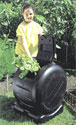
Now is a great time to begin composting for using in Spring plantings. If you have never composted before, it may seem intimidating, but don't be shy. It is easy to do, and with one initial investment, will save money and resources. First you will need to pick a composter.
Ya
As for using a composter, all you need to do is throw in your organic table scraps (vegetables, egg shells, etc.) and yard trimmings. You will want to break everything down into small pieces so that it will turn into compost quickly. If you are contributing trimmings from your shrubs for example, run them through a wood chipper first. If you are throwing in a head of lettuce, tear it down first. You will want to keep a moisture level of about 40%. Peat moss is a great additive to keep the moisture balance. Keeping that balance will keep the odor down and encourage aerobic bacteria. Aerobic bacteria will kill critters which would otherwise try to inhabit compost, in addition to promoting the breakdown process for quick composting. Almost 45% of household waste is organic. You can use that 
The Sun-Mar Composter is a continuous use fertilizer. You can expect to get your first batch of useable compost, or fertilizer in about 2-5 months, depending on the size of the composter you use and how much waste you add. It is a great way to garden, save money, prevent waste, and educate young or new gardeners.
Yardiac.com would love to post photos or videos of gardeners using composters. Feel free to send contributions to Blog@Yardiac.com. Let's spread the knowledge!
Thursday, December 11, 2008
Using an Outdoor Sink
Even though most of us are just trying to keep warm right now, spring will be on 
It is an outdoor sink. You would be surprised at how much it will come in handy. All you need is an outdoor spigot and you are set. They come in a variety of styles, but the most popular is the free standing. Some have 
If you are currently using a outdoor garden sink, send us a picture and we will post it to our blog! We would love to hear your story.
Subscribe to:
Posts (Atom)


